
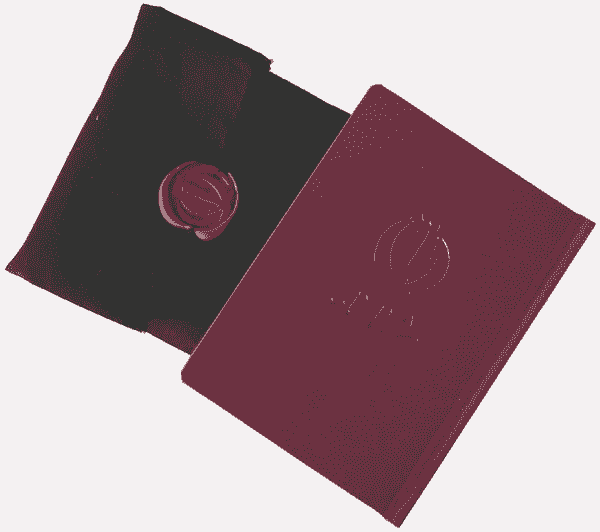
Amak Mahmoodian - Shenasnameh
2016
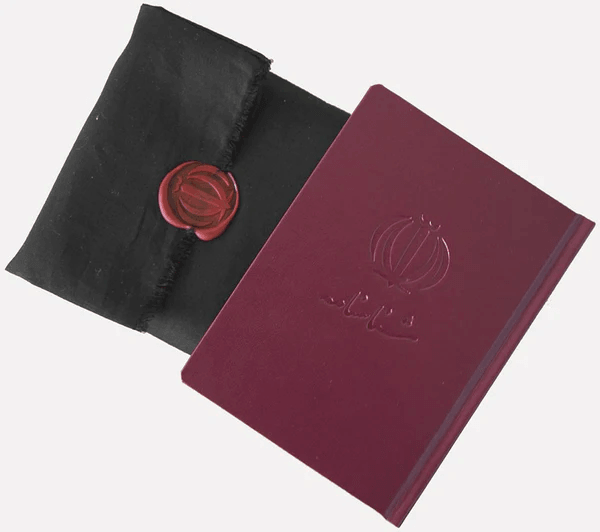
"I am Iranian. I was born in 1980, the same year as the Islamic Revolution. I learned how to wear my scarf when I was seven years old. I still remember putting it on for the first time, getting ready for my first day at school. It was me, my mother and a mirror. Two years later my Religious teacher stopped me in the corridor for letting my hair show. She told me to cover my hair completely. She said “When you die, Amak, you will go to hell and you will be hanged with your hair strand over a very big fire for all eternity because you didn’t hide it from the eyes of strangers in your lifetime.”
Six years ago, I was waiting in a reception room, holding the birth certificates of my mother and me. We looked similar in our ID photographs. That same day my fingerprint was fixed next to my image, and my mother’s fingerprint next to her image. Despite the outward similarity of the images the fingerprints were different; the scar I had on my finger became part of my identity next to my photograph. I decided this meant something, that our identities were entwined with these official identities, with these prints and these papers. In the following three years, I collected similar images and fingerprints from different women in Iran. Each was different from the other, and had a story to tell." - Amak Mahmoodian
Clare Strand - Girl plays with snakes
2016
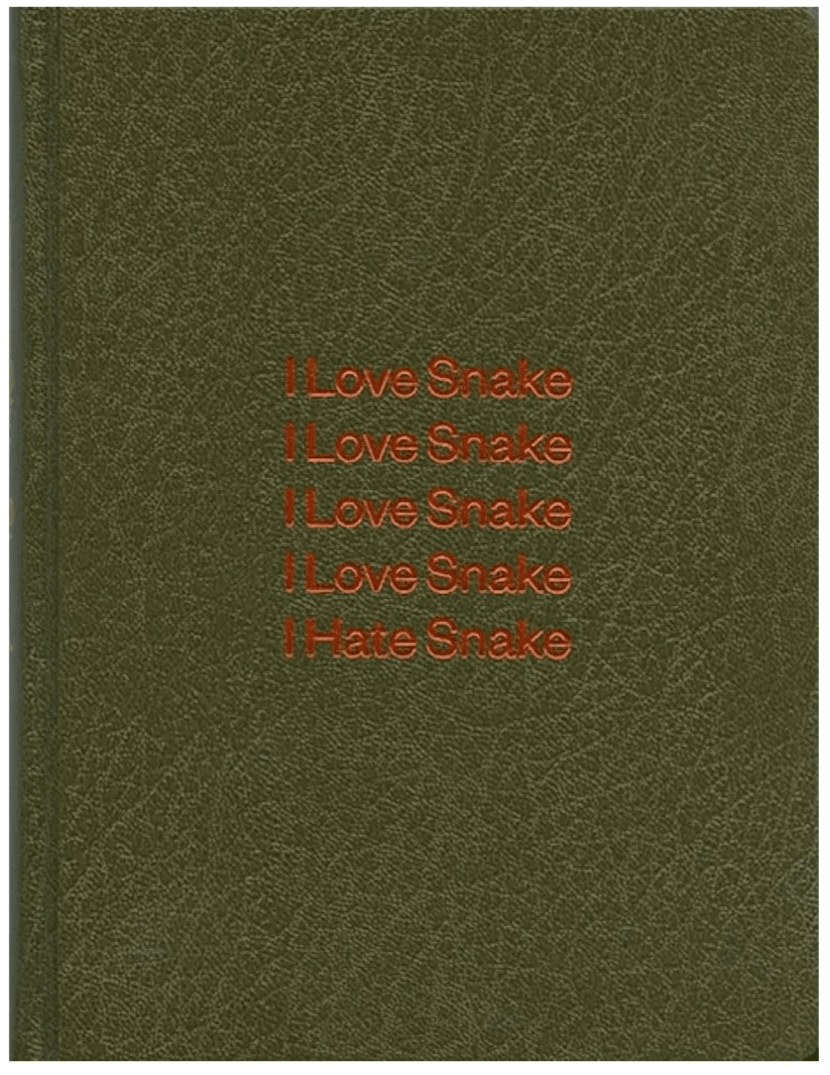
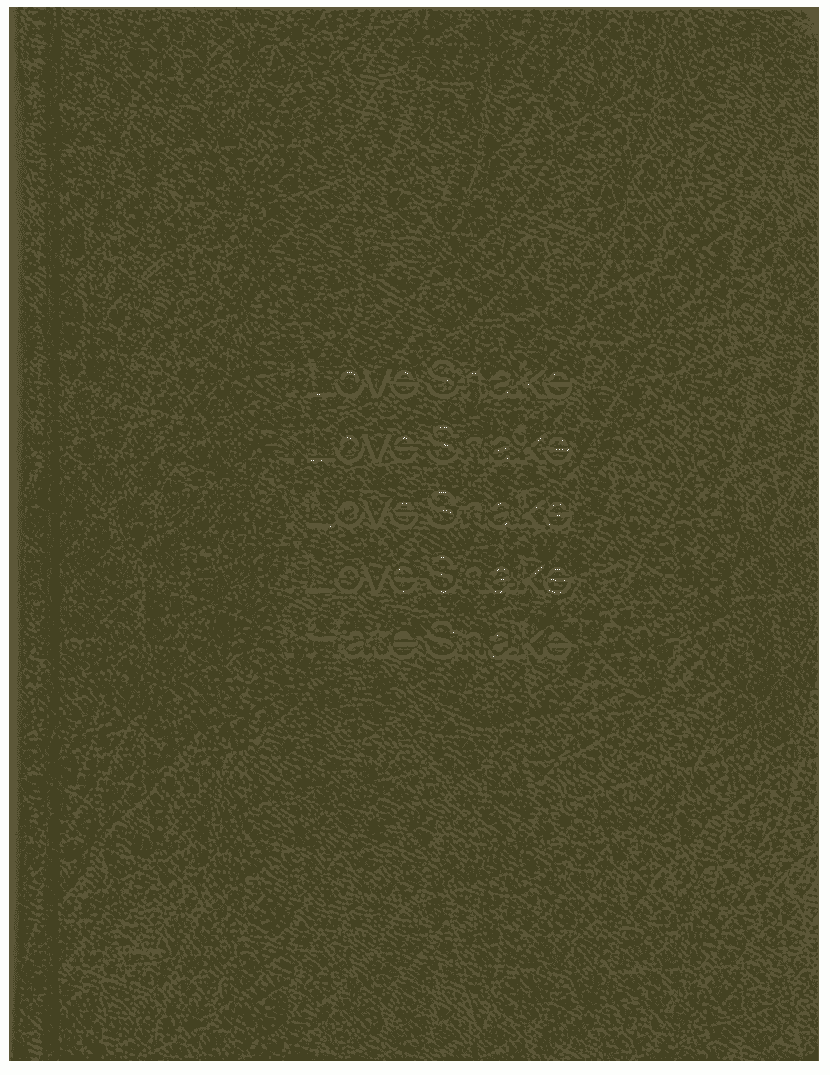
Girl Plays with Snake by Clare Strand comprises images sourced from the darkest recesses of the artist’s extensive archive. The project continues Strand’s decades-long engagement with the scrapbooks, magazines and photographs that she has drawn together since her mid-teens. In this iteration of Strand’s ongoing research and reflection, women and girls are pictured holding, playing with and gazing fondly at snakes. Key to understanding the intention of the imagery is the inclusion of original accompanying text attached to the reverse, revealing stories of the bizarre and the erotic,
alongside Myth and Credo.
Siegfried Kracauer would recognise Strand as a dedicated “Rag Picker”. She describes her working method as being like "rolling in newly cut grass and seeing what you pick up on your jumper”. Strand’s constantly evolving practice brings together intensive research, deadpan humour and insights into popular culture. She shifts from the mysterious and the absurd to understand public obsessions, often via trickery and manipulation. Recently exhibited work includes machines to encourage entropy, web programmes, looped films and intricate photographic constructions subverting, reimagining
and manipulating the medium’s origins.

Ester Vonplon - Nocturnes
2016
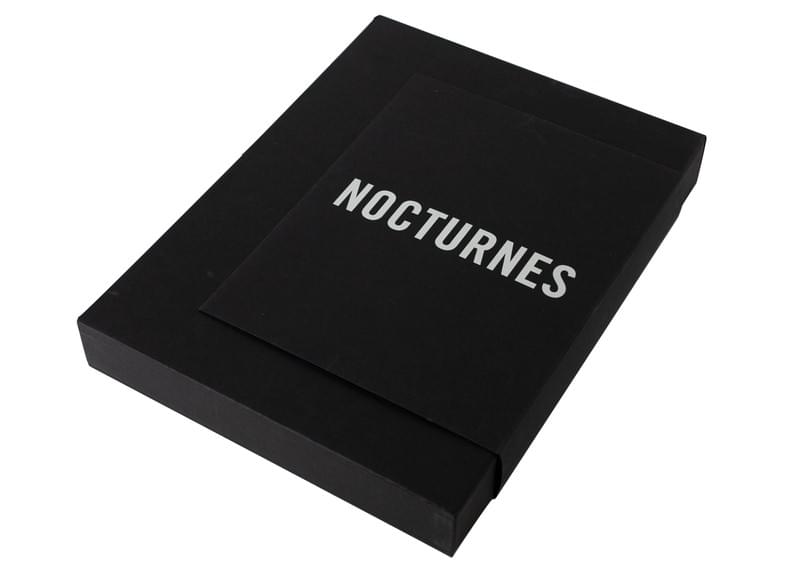
‘AM projects’ consists of Aaron McElroy, Daisuke Yokota, Ester Vonplon, Gert Jochems, Olivier Pin-Fat and Tiane Doan na Champassak. NOCTURNES is a unique boxed set of 6 books by the new photography group ‘AM projects’ and published by dienacht Publishing. This book is printed using different papers for each photo essay – one even has an enormous fold-out poster. It is a landmark in photobook production. NOCTURNES is the first ‘AM’ project and explores 6 different photographic journeys into ‘the night’. -Publisher
Hanayo - Tenko
2016
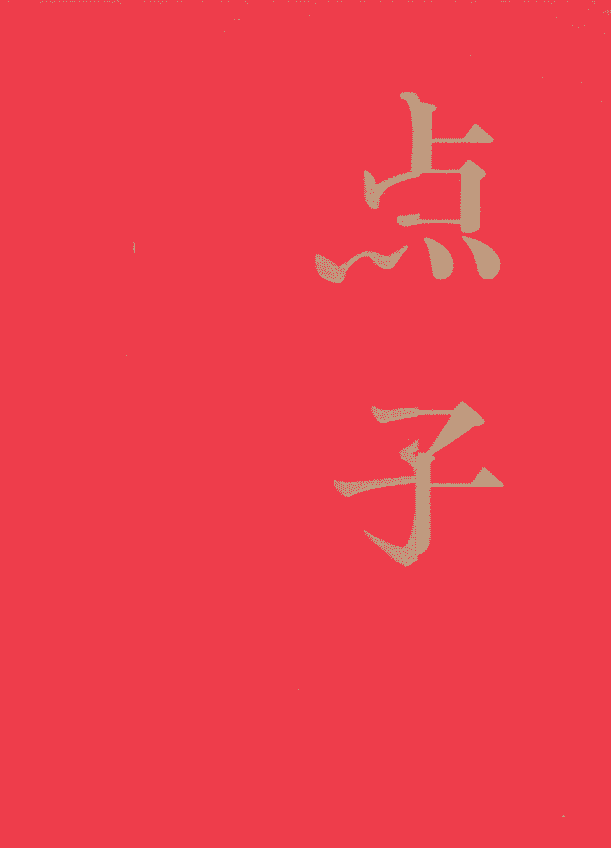
Tenko, her beloved daughter, has always been an important subject for Japanese artist Hanayo. After the birth of Tenko, Hanayo has documented her daughter’s growing up between Tokyo and Berlin, in her double capacity as mother and artist.
One of the first and second books Tenko came into contact with during her childhood was “Shojo Arisu (Alice)” (1973) by Hajime Sawatari, In Hanayo’s photos, Tenko can be seen squatting over the photo book, reading in it as if it were a picture book.
At 15, Tenko met the creator of this favourite book of hers, photographer Hajime Sawatari. After their initial encounter, Tenko went on to become one of Sawatari’s most important photographic subjects. Five years later, the two have collaborated on photographic works that carry the mystical, distant sensuality of theoriginal “Alice” photobook.
The photo book “Tenko” is an intersection between Hanayo’s photos, taken in her role as Tenko’s mother, and Hajime Sawatari’s mystical, sensual photos inspired by Tenko’s favourite childhood book, Sawatari’s “Alice”.
-Statement from the distributor
Irene FLANHARDT, 黄曼玲
- The Charm of Tai O
2016
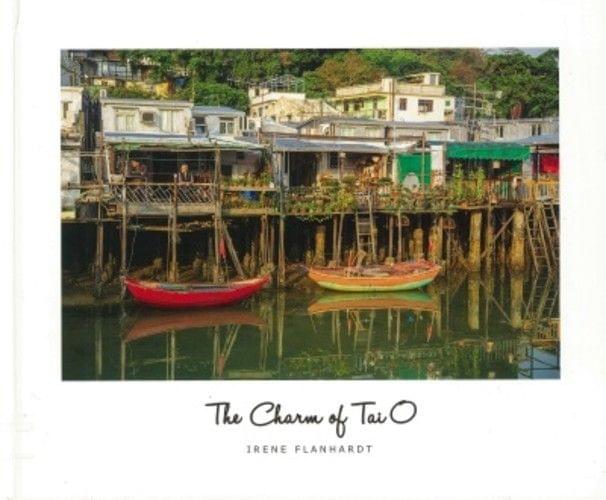
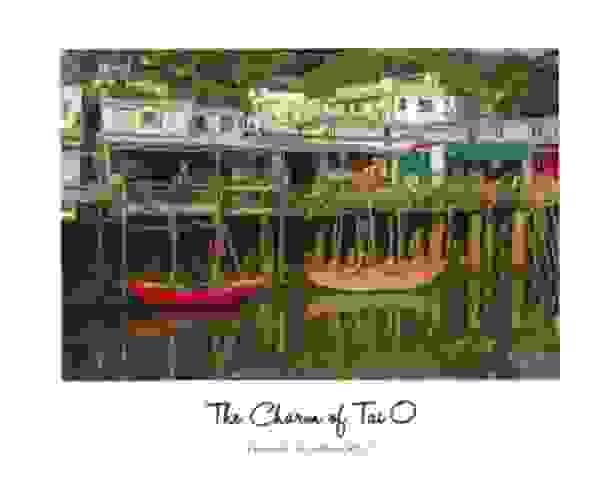
Tai O Fishing Village is a photographer’s paradise. Captivated by its charm, simplicity and tranquility, Irene Flanhardt started taking photos in the village in 2011. These photos depict the inhabitants’ lifestyle, the iconic stilt houses, the charming fishing boats, the culinary treasures (the famous salted duck egg yolks, shrimp paste and salted fish), the nostalgic landscape, the historic buildings (the Grade I Yeung Hau Temple and the Grade II Tai O Heritage Hotel), the dragon boat races, the two devastating fires (in 2000 and 2013) and some interesting objects Irene found in the streets of Tai O.
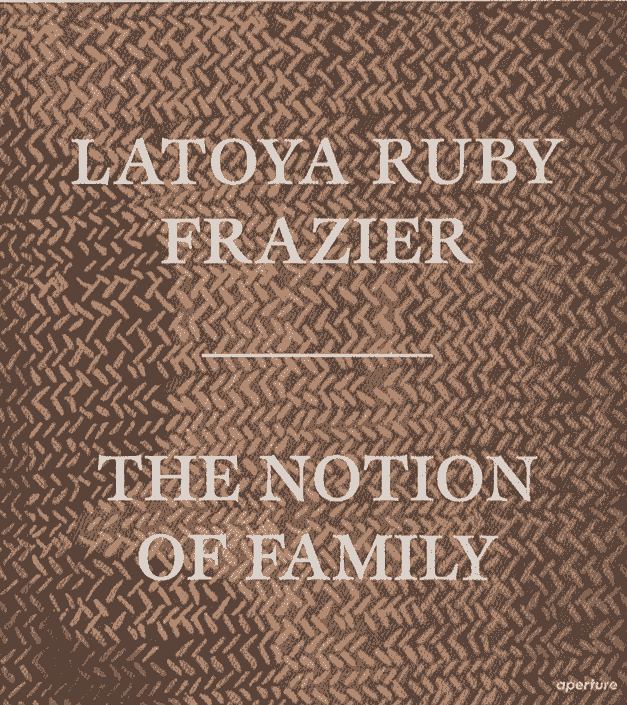
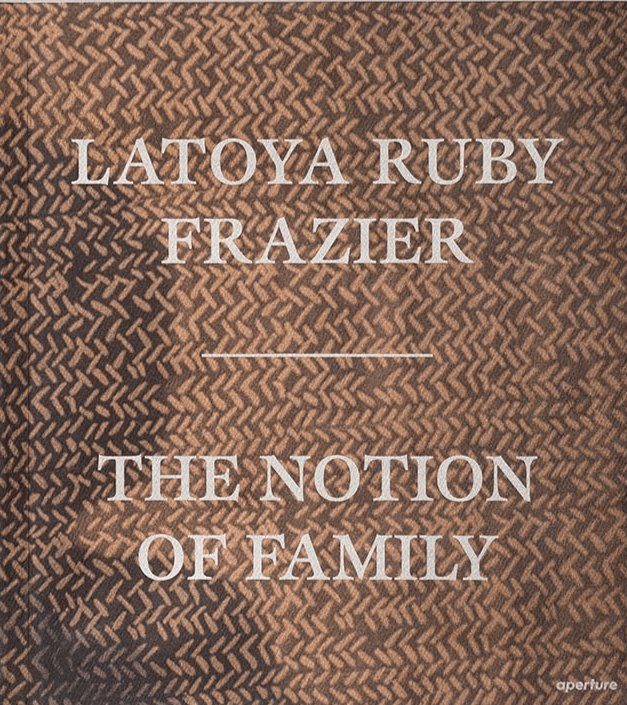
Latoya Ruby Frazier - The Notion of Family
2016
LaToya Ruby Frazier’s award-winning first book, The Notion of Family, offers an incisive exploration of the legacy of racism and economic decline in America’s small towns, as embodied by her hometown of Braddock, Pennsylvania.
The work also considers the impact of that decline on the community and on her family. Creating a statement both personal and truly political — an intervention in the histories and narratives of the region. Frazier has compellingly set her story of three generations—her Grandma Ruby, her mother, and herself— against larger questions of civic belonging and responsibility.
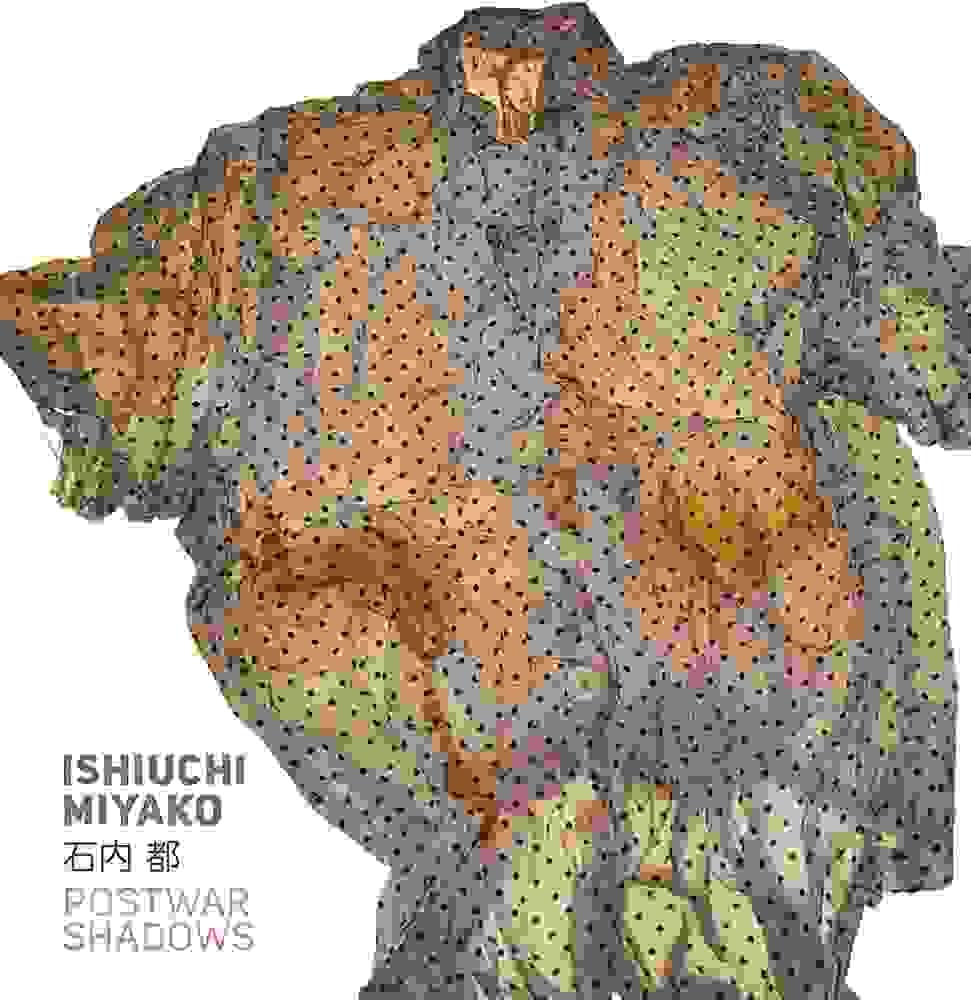
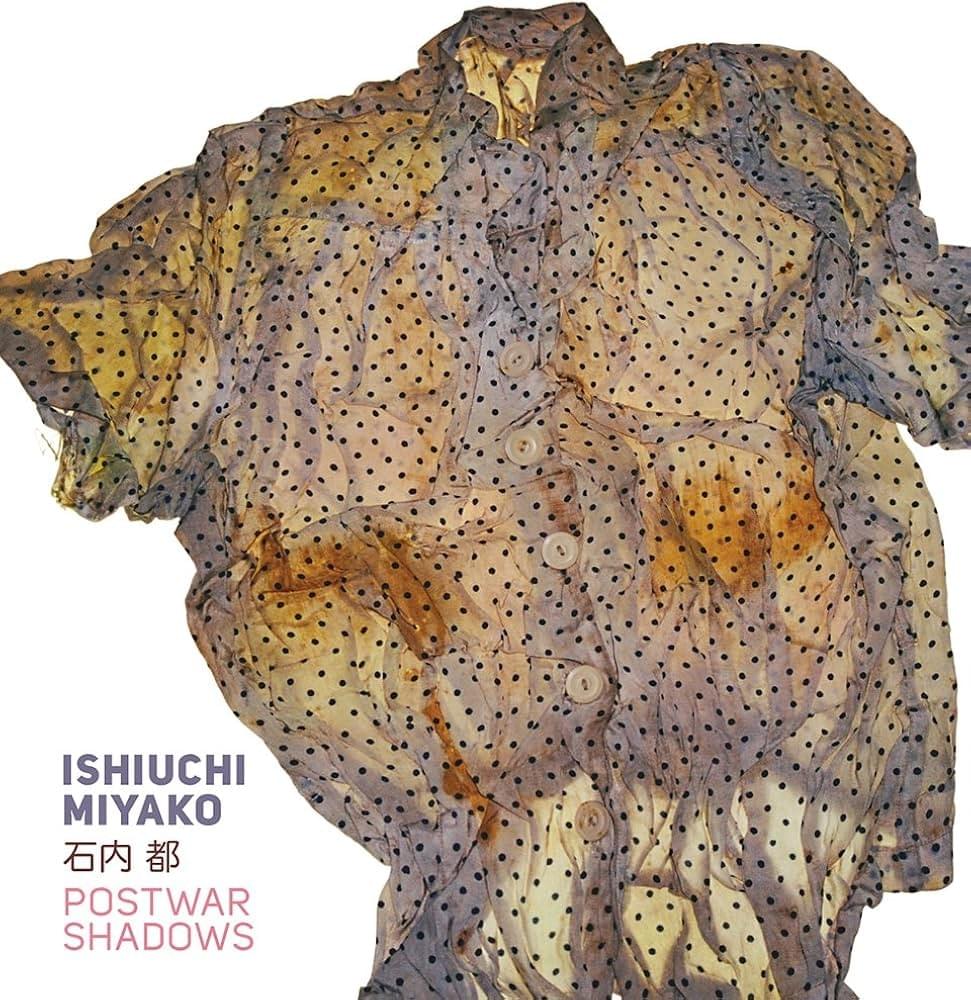
Miyako Ishiuchi - Postwar Shadows
2016
A maverick in the history of photography, Ishiuchi Miyako (b. 1947) burst onto the scene in Tokyo during the mid-1970s, at a time when men dominated the field in Japan. Working prodigiously over the last forty years, she has created an impressive oeuvre and quietly influenced generations of photographers born in the postwar era. Recipient of the prestigious Hasselblad Award in 2014, Ishiuchi ranks as one of the most significant photographers working in Japan today.
Spurred by her contentious relationship with her hometown, Yokosuka — site of an important American naval base since 1945 — Ishiuchi chose that city as her first serious photographic subject. Grainy, moody, and deeply personal, these early projects established her career. This choice of subject also defined the beginning of Ishiuchi’s extended exploration of the American occupation and the shadows itcast over postwar Japan.
Ishiuchi has since addressed the theme of occupation both indirectly — through her photographs of scars, skin, and other markers of time on the human body — and more explicitly, with her images of garments and accessories once owned by victims of the atomic blast in Hiroshima. Essays featured in this volume reveal the past as the wellspring of Ishiuchi’s work and the present moment asher principal subject.
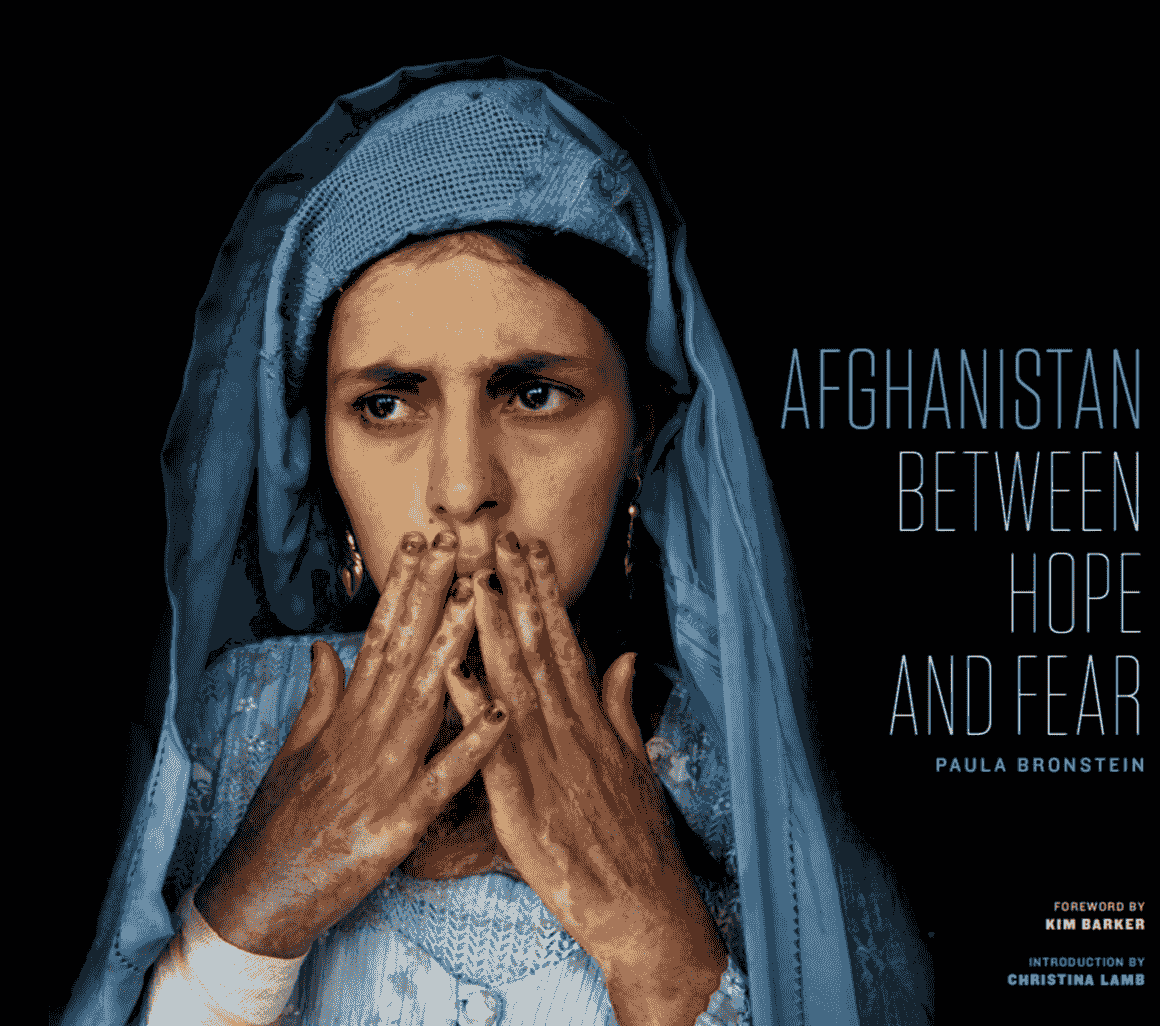
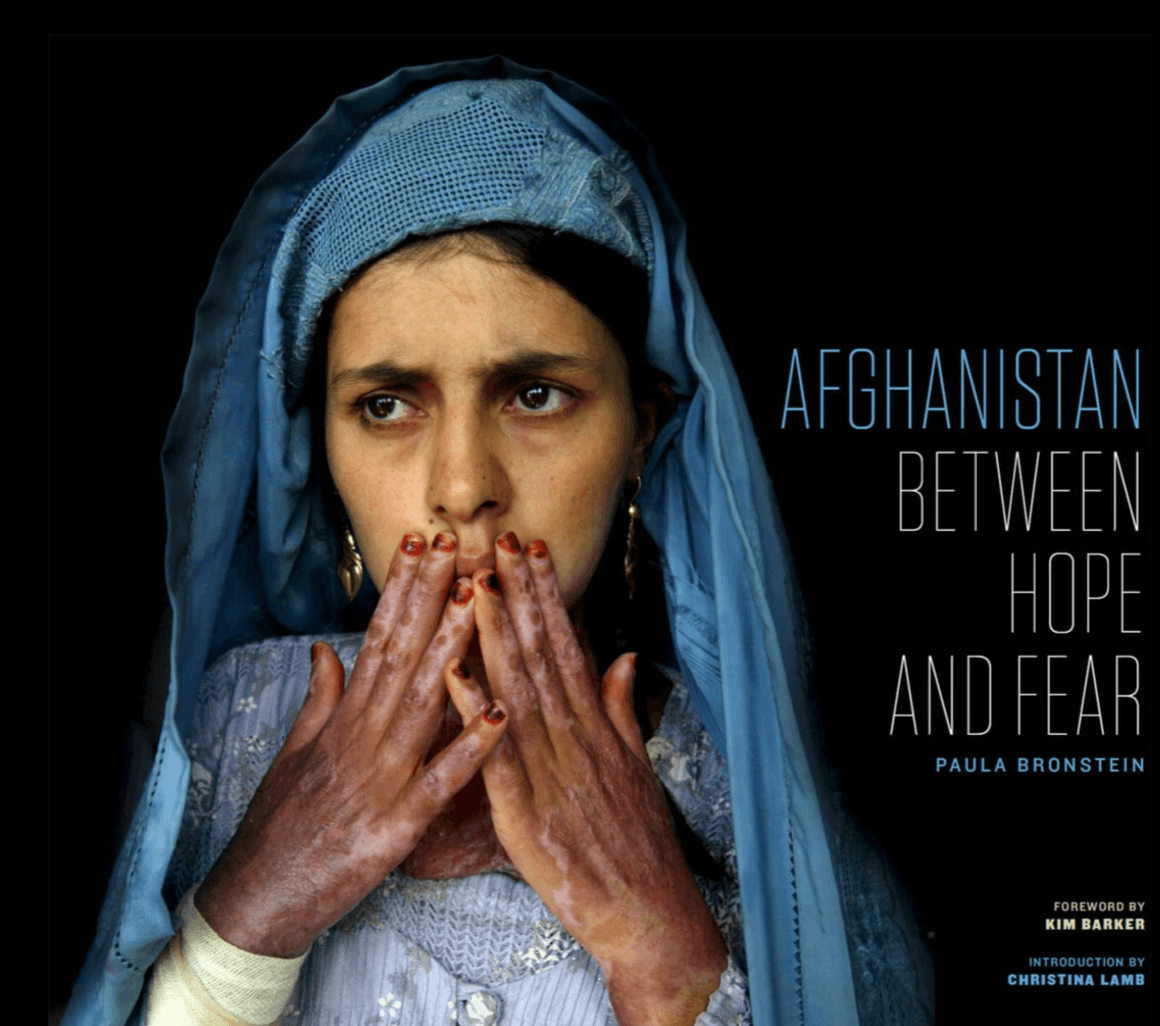
Paula Bronstein
- Afghanistan: Between Hope and Fear
2016
Afghanistan: Between Hope and Fear presents a photographic portrait of this war-torn country’s people across more than a decade. With empathy born of the challenges of being an American female photojournalist working in a conservative Islamic country, Bronstein gives voice to those Afghans, particularly women and children, rendered silent during the violent Taliban regime. She documents everything from the grave trials facing the country—human rights abuses against women, poverty and the aftermath of war, and heroin addiction, among them—to the stirrings of new hope, including elections, girls’ education, and work and recreation. Fellow award-winning journalist Christina Lamb describes the gains that Afghan women have made since the overthrow of the Taliban, as well as the daunting obstacles they still face. An eloquent portrait of everyday life, Afghanistan: Between Hope and Fear is the most complete visual narrative history of the country currently in print.
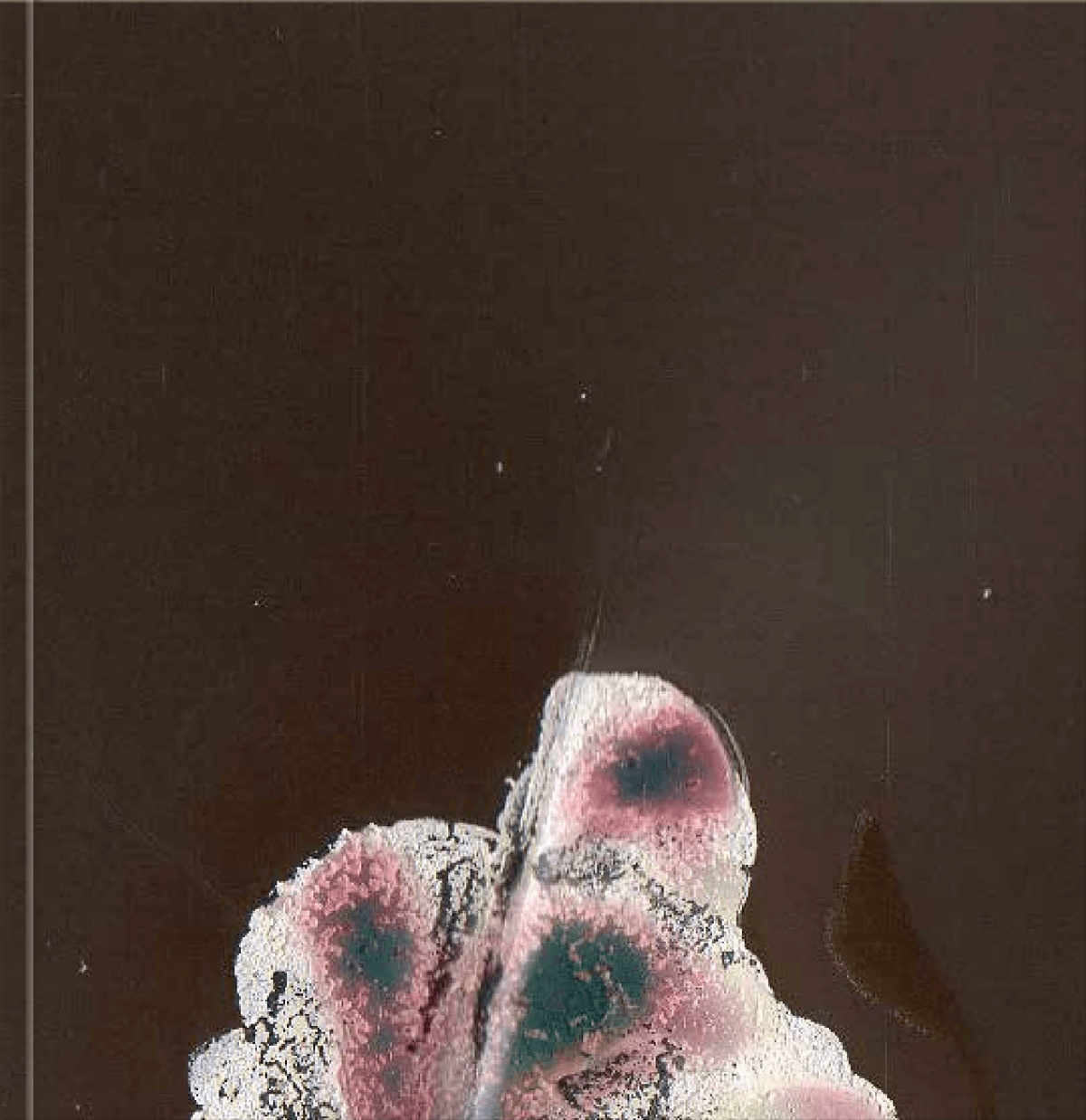
Sara Davidmann - Ken. To be destroyed
2016
This project began with an archive and a discovery. Sara Davidmann and her siblings inherited letters and photographs belonging to her uncle and aunt, Ken and Hazel Houston, from her mother, Audrey Davidmann. The letters chronicled the relationship between Ken and Hazel. It emerged soon after they were married that Ken was transgender. In the context of a British marriage in the 1950s, this inevitably profoundly affected both their relationship and their relationships with the people around them. They remained together from 1954 to the end of Ken’s life.
Hazel and Audrey wrote to each other frequently in the late 1950s and early 60s after Hazel discovered that Ken was transgender; these letters tell Ken and Hazel’s story. In response to the letters and family photographs Sara Davidmann has produced a new set of photographs using analogue, alternative and digital processes as well as working on the surfaces of the photographs she produced using ink, chalks, hand tinting, magic markers and correction fluid.
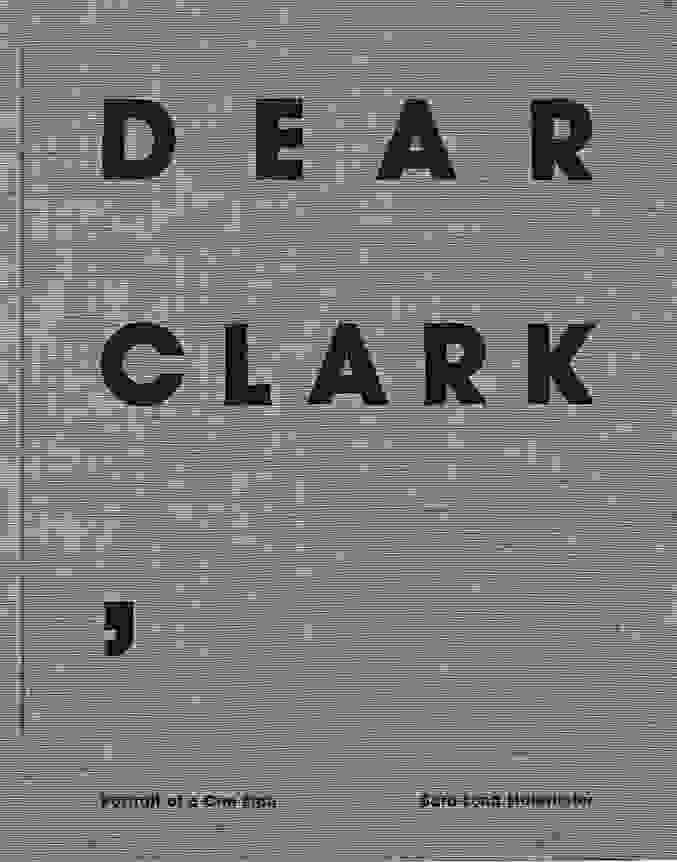
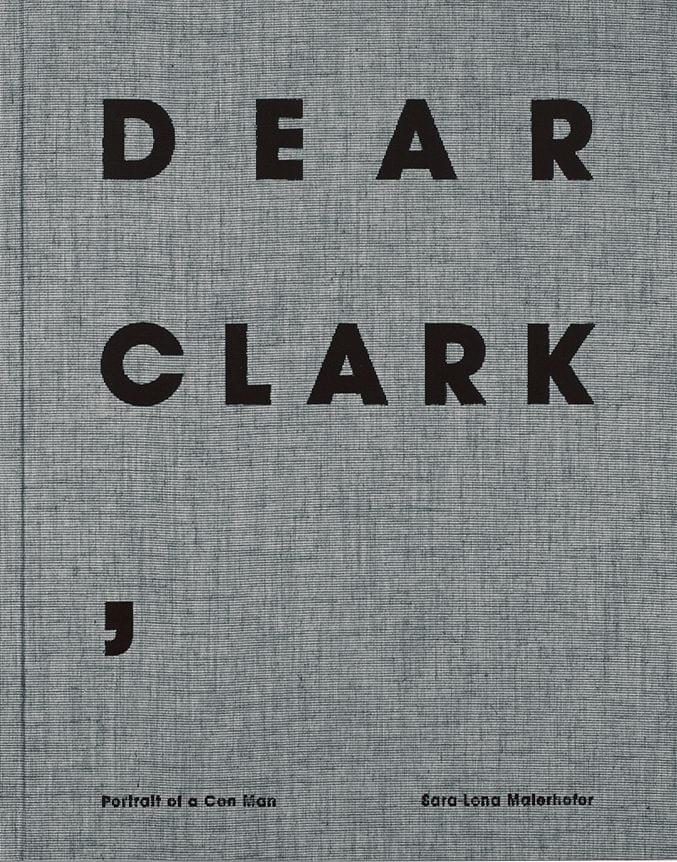
Sara-Lena Maierhofer - Dear Clark
2016
Christian Karl, a bit ordinary, hardly impressive. The names he designed for himself were more beautiful, more resonant: Christopher Crowe, Clark Rockefeller. He created his own reality, and everyone fell for it. With each new name he left his previous life behind. As though it had never existed. Almost without a trace.
Erasing the past, tailoring a new identity, becoming somebody else; not just anyone, but a Rockefeller. The old, long buried self used to be Christian Karl Gerhartsreiter from Bavaria. But he vanished a long time ago in a journey from Germany to the States. His initials were lost in a series of taken names; his skin appropriated a handful of aliases, all grandiose and luxurious in lifestyle. In 2008, after three decades of spurious identities, the lie collapsed and with it the man. Christian Karl Gerhartsreiter, aka Christopher Crowe, Clark Rockefeller to name but a few; to many a swindler, a con man, a crook; to others, a gifted storyteller, a man with a polished accent who dared to be whatever he wished.
Sara-Lena Maierhofer discovered Clark in a newspaper article in 2008. She became fascinated by the man with multiple skins and decided to approach him. After Clark refused to meet her, she decided to study him from a distance; to conduct her own criminal investigation based on the existing pieces of forensic evidence- the bits of newspaper, pictures, even Clark’s early childhood drawings, and her letters to him. Still Maierhofer needed to go further. In an attempt to penetrate the multiple layers of his lie and reach the core of his personality, she chose to approach him through fiction, following Clark’s lead. She imagined him in a world of clones and doubles, one where the borders of truth and lie collapse against the rigid confinements of the image.
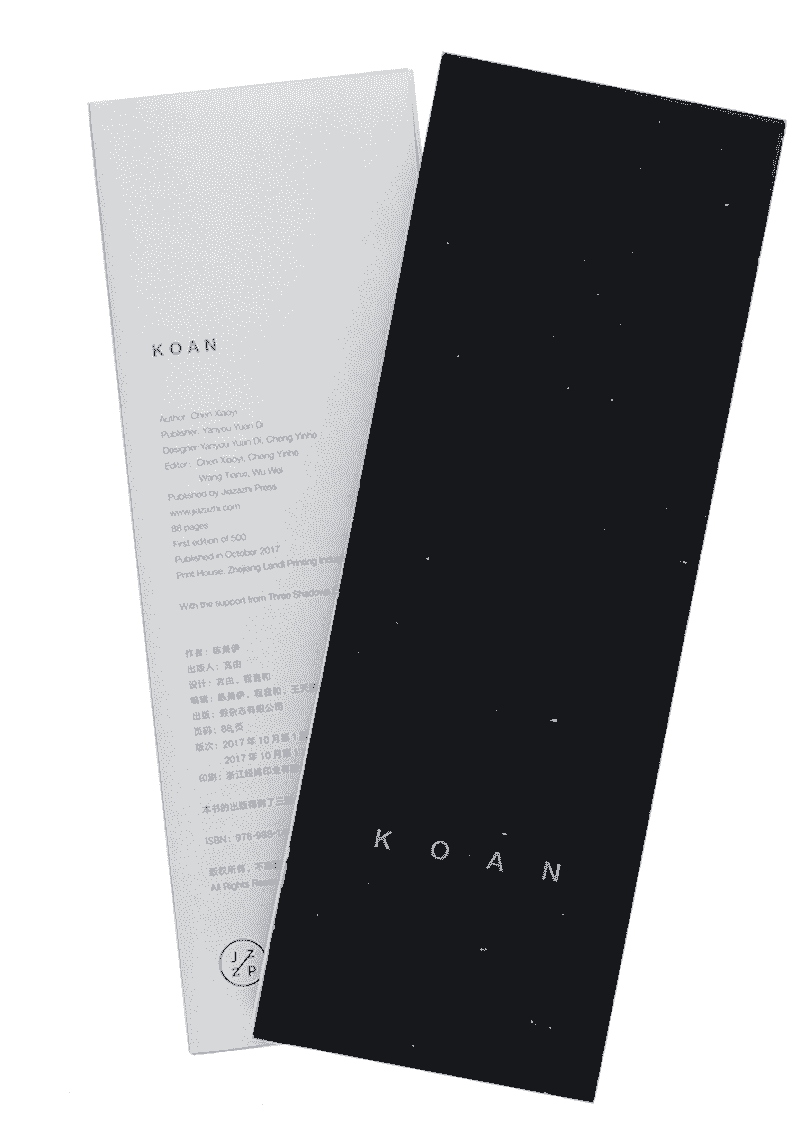
Chen Xiaoyi - Koan
2017
"Koan is the possibility to open up the territory of pre-verbal. As human beings, our reality based on symbolic matrix, so all possibility of our thoughts and wisdom be covered and limited by signifying chain. Only vision as a product of the non-material is closer to a concept of purity, so through photography as my own philosophical approach, I try to explore beneath the surface of things by simplification and abstraction to awaken spiritual awareness and intuition before the symbolic.
As Eastern philosophies, Tao and Zen always advise people to stay absolutely quiet and purify thought processes. In order to achieve this goal, our attention should focus on the most basic form of the universe’s existence. In Zen Buddhism, Koan is a story or riddle used to help in the attainment of a state of spontaneous reflection, free from planning and analytical thought. In contradiction to Western philosophy, Koan’s emphasize the inadequacy of language and words, and the importance of intuition over reason and logic,to transform the self.
I named the series as “Koan”, and selected abstract landscape photographs to do photo-etching process; the results of this craft are poetic and full of imaginations. Also only uses black ink and print on different Japanese papers, the color is deriving from the atmosphere of desolation and melancholy and the expression of minimalism in ancient Chinese poetry and monochromatic ink painting.”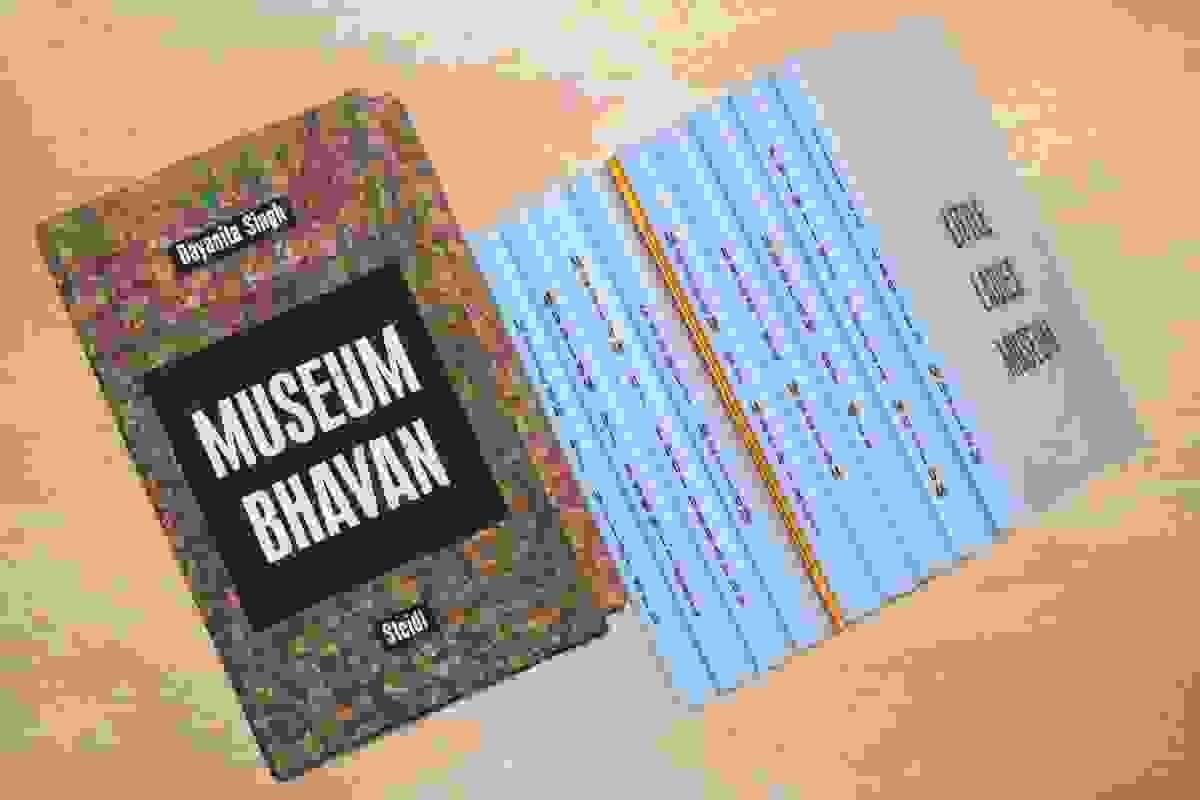
Dayanita Singh - Museum Bhavan
2017
In Museum Bhavan Dayanita Singh creates a new space between publishing and the museum, an experience where books have the same if not greater artistic value than prints hanging on a gallery wall. Consisting of nine individual “museums” in book form, Museum Bhavan is a miniature version of Singh’s traveling exhibition of the same name whose prints are placed in folding expanding wooden structures (her “photo-architecture”), which she likes to interchange at will.
The images in Museum Bhavan—old and new, intriguingly literal and suggestive—have been intuitively grouped into lyrical chapters in a visual story such as “Little Ladies Museum” and “Ongoing Museum,” as well as more specific series like “Museum of Machines.” Following her Sent a Letter (2008), the starting point for this project, the books are housed in a handmade box and fold out into accordion-like strips which Singh encourages viewers to install and curate as they wish in their own homes. The exhibition thus becomes a book, and the book becomes an exhibition.
Eva H.D. - Gohar Dashti: Photos
2017
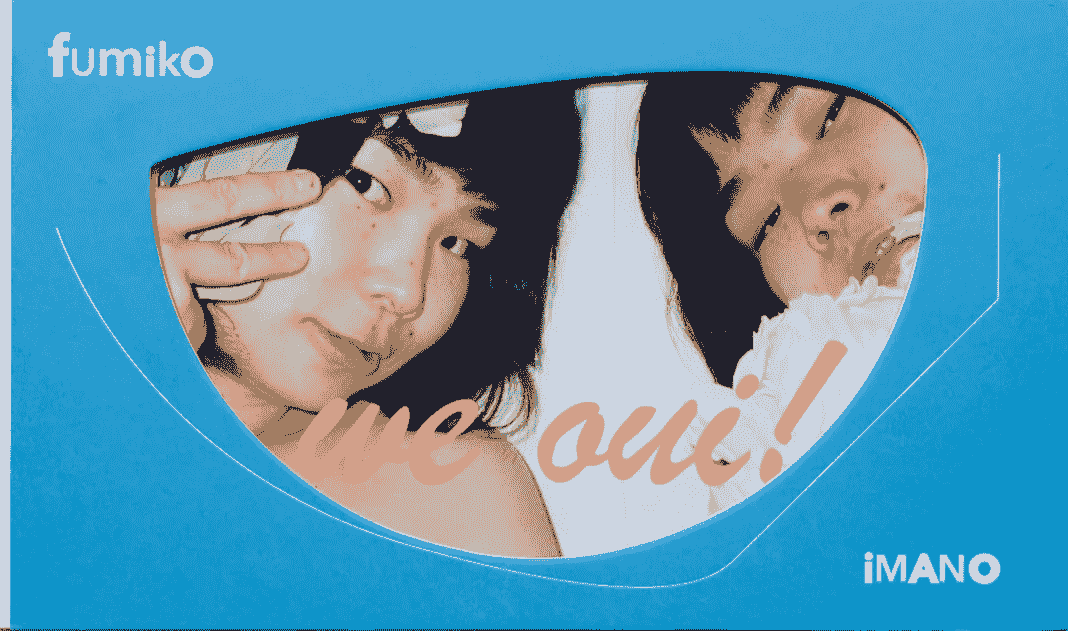
Fumiko Imano We Oui !
2017
"Twins" was born by accident. When I came back to Japan from London, I started making twins pictures to cheer myself up. I was already 27 and once again I was an alien in my own country. Living as a proper Japanese lady with responsibility was very heavy burden; it was hard for me to accept. So I enjoyed making child like twins to make my life better. I thought: "If I have a twin sister, I won't be lonely, and I will be happy living in any environment together." It actually makes me laugh when I see myself becoming a twin by cutting and pasting. It somehow encourages me to live in this so-called "developed country".
Jiang Yawen - The Hated Virgin
Brownie Publishing 2017
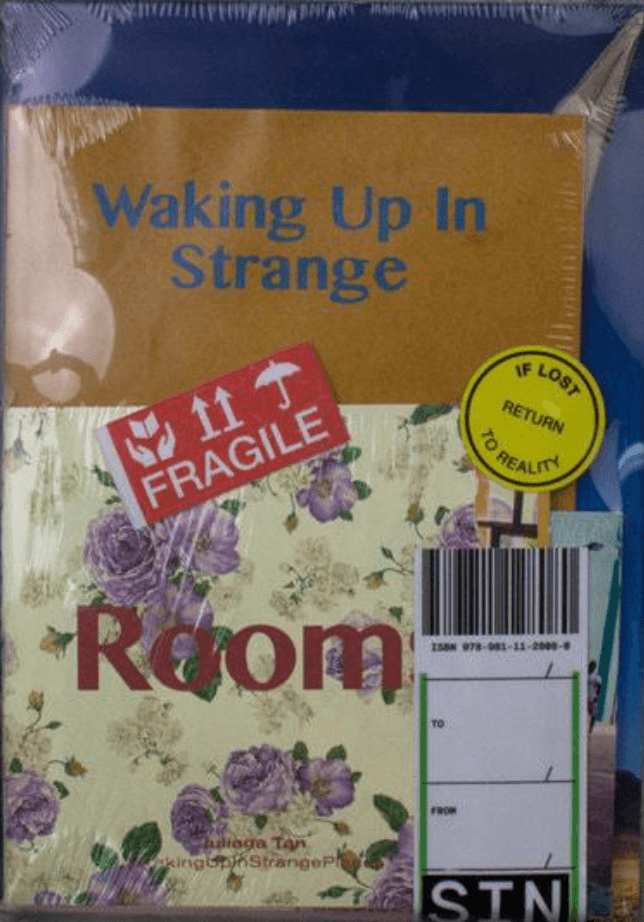
Juliana Tan - Waking up in strange places
2017
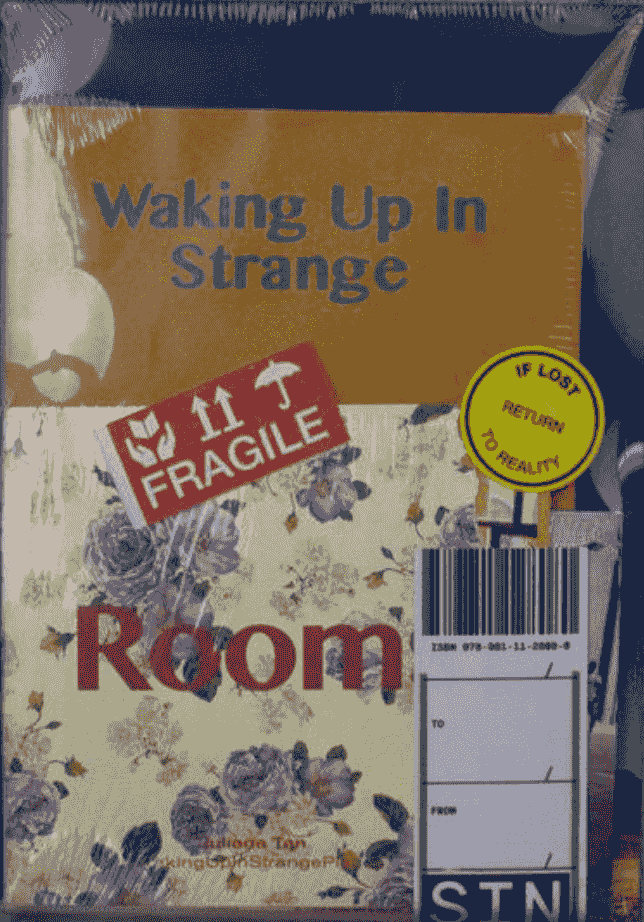
Waking Up in Strange Places is a travel compendium through 9 countries and 33 cities. The zine consistes of 5 chapters that are bound together by magnet. This allows the reader to arrange and re-arrange the chapters in any way that they wish—there is no fixed way of viewing or displaying the zine.

Liang Xiu - From Something to Nothing
2017
Lieko Shiga - Blind Date
2017
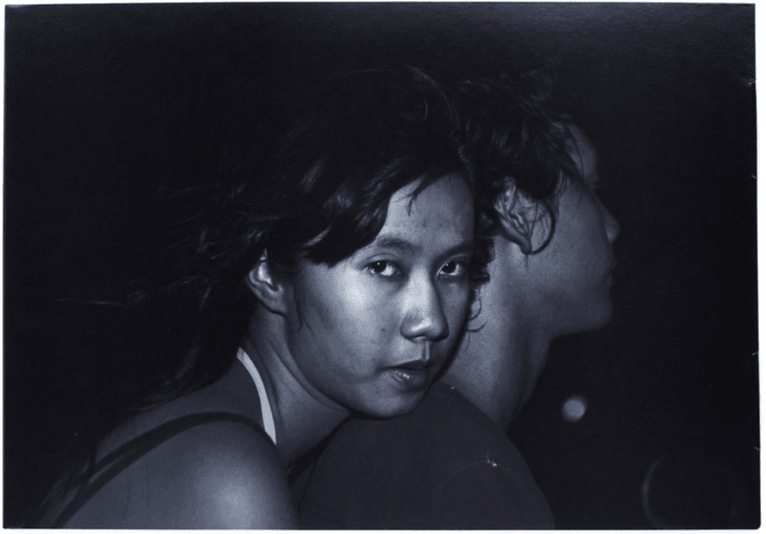
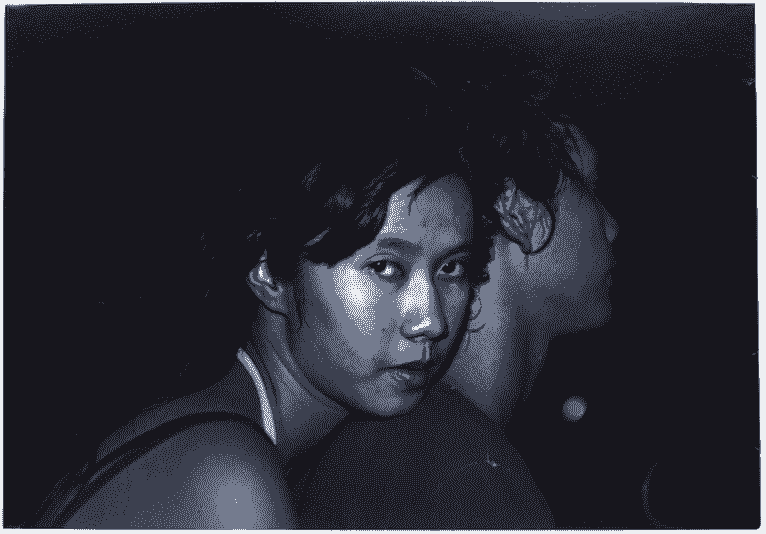
A photobook of black-and-white images capturing couples on motorbikes in Bangkok, Thailand, taken during the summer of 2009. The book explores sensuality and the act of looking through its repetitive, yet slightly varying, images of couples who often make direct eye contact with the viewer. It uses a unique binding that evokes the feeling of passing by these fleeting moments and moments of intense connection.
Maiko Haruki - _etc.
2017
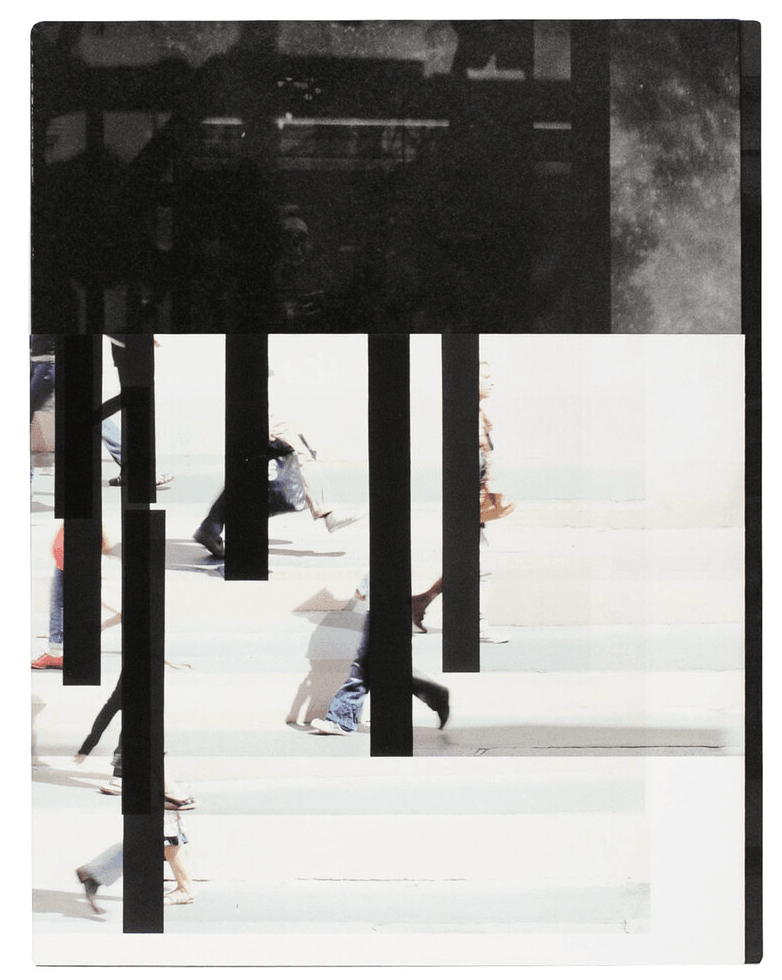
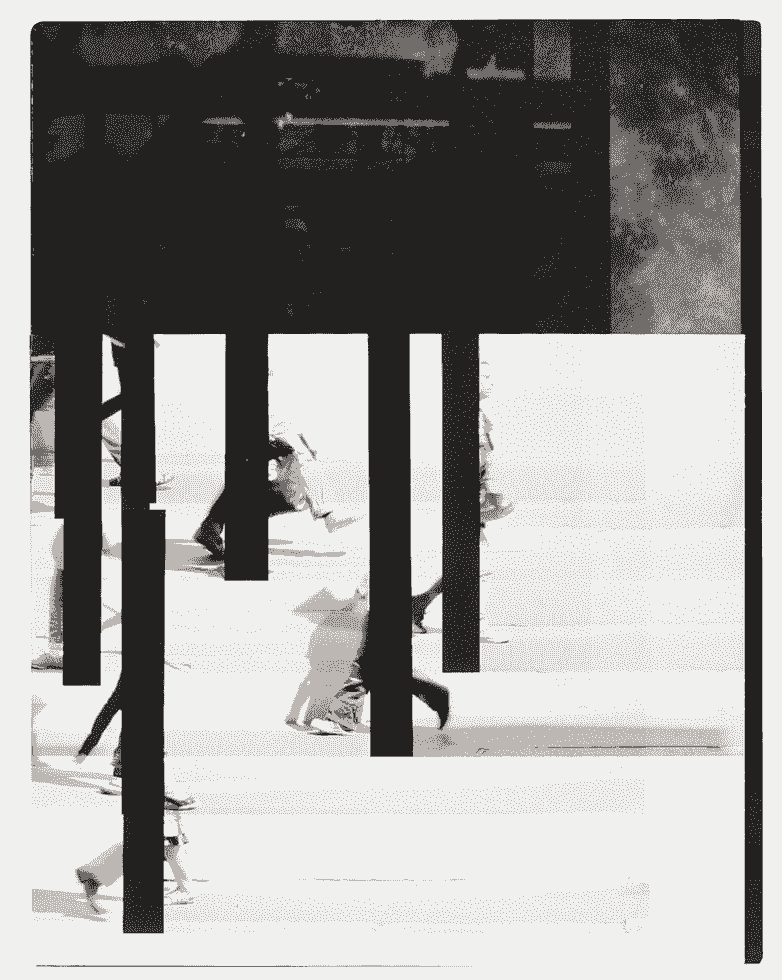
This album is Maiko Haruki's fourth photo book in six years.
The book is organized into three series. It deals with the development of three-dimensional events that we try to "see" in a two-dimensional format. Black slits, as if capturing a moment, were overlaid on people passing through the city. Landscapes of Ireland and the Tokyo Tennmonkan (Tokyo Planetarium) are superimposed within the same image. Maiko Haruki is a promising artist who experiments with
film to achieve new forms of photographic expression. She intentionally creates under- or overexposed images, resulting in photographs that are almost entirely black or white. Even in the darkroom, she moves the negatives during printing to incorporate the blank spaces between them as intentional elements of her work. In her latest exhibition at Taro Nasu (Tokyo), Haruki deepened her exploration of the act of seeing, creating a gravity-defying space that induces an almost floating sensation. She discussed the genesis of these new works and how her ideas evolved.
Mandy Barker - Beyond drifting
2017
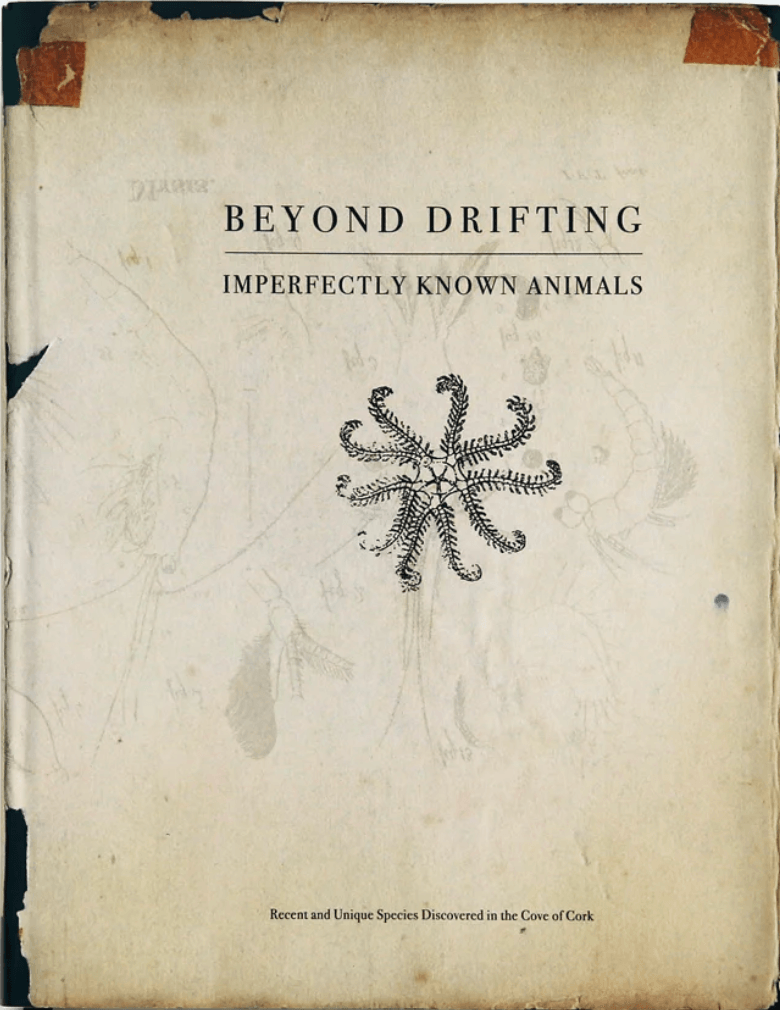
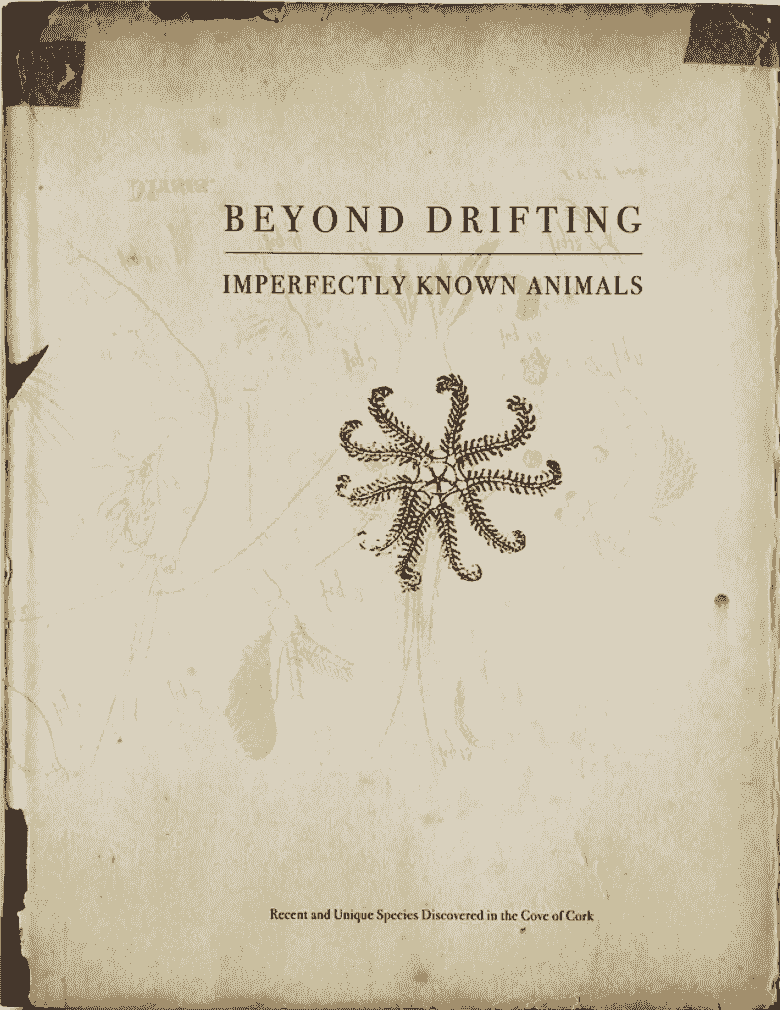
The series of work is presented as an old science book from 1800's, that as well as reflecting the current situation regarding organisms intake of plastic, also subtly includes the original writing, descriptions, and figures recorded by Thompson in his research memoirs of 1830, entitled, 'Imperfectly Known Animals'. The book uniquely captures our changing times along with both past and present research.
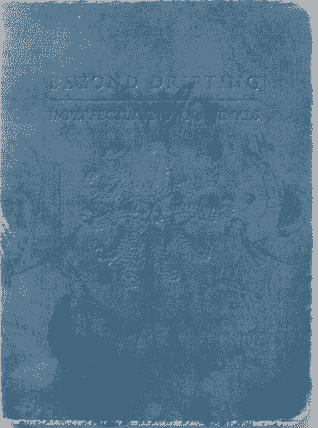
Mandy Barker - Beyond drifting (Mini Edition)
2017
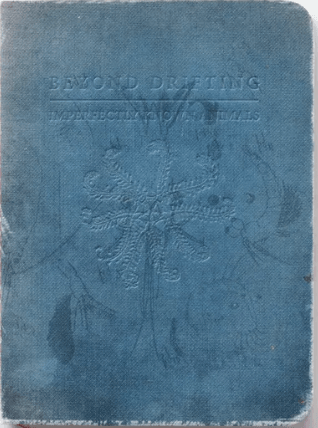
A miniature edition of Mandy Barker's collection Beyond Drifting: Imperfectly Known Animals.
This book is based on a book by John Vaughan Thompson (JV Thompson) published about 200 years ago by an author who works on the theme of marine environmental issues. While using it, it is produced with the theme of marine pollution by microplastics. Since the publication of the original edition in May 2017, the issue of microplastics and plastic pollution in the ocean has received even more media attention around the world, prompting large corporations as well as individuals to opt out of single-use plastics in supermarkets and at home. changes are taking place. Mandy continues to work on this project to further focus her international conservation interests. This new edition, which has been reborn in a size that is one size larger than a passport, is a digest version, but it has a finish that makes you feel that you are more particular than the original version and that you want to deliver this work to more people. became.
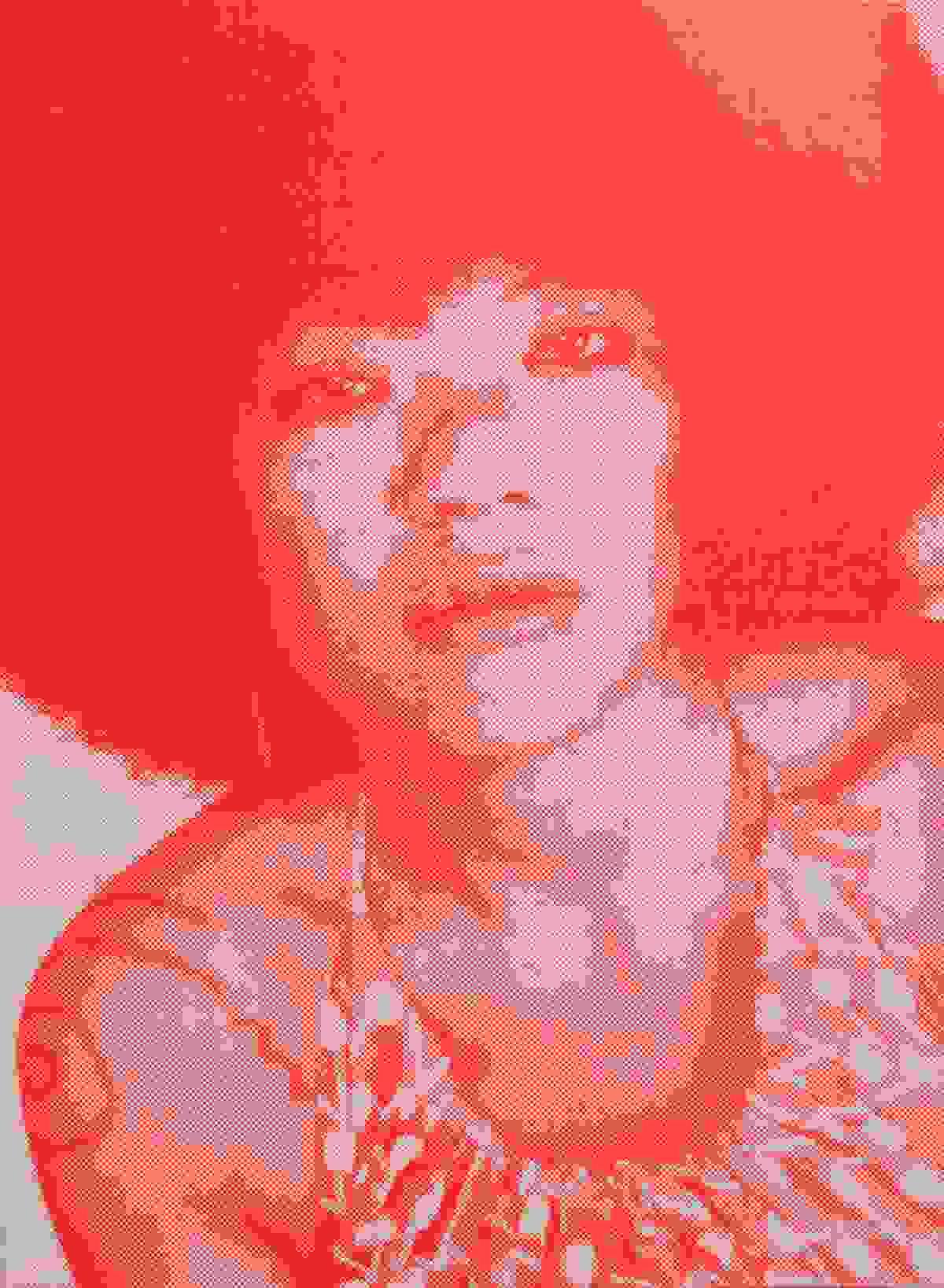
Mao Ishikawa
- Red Flower, The Women of Okinawa
2017
Red Flower, The Women of Okinawa" is Okinawan photographer Mao Ishikawa's first US monograph. It features 80 black and white photographs from 1975-1977, primarily drawn from her groundbreaking 1982 book "Hot Days in Camp Hansen," along with previously unpublished work from that period. The book celebrates the courageous lives of women Ishikawa befriended while working in military bars during heightened US-Japan tensions.
"Red Flower" represents Ishikawa's pivotal work - the starting point of her long career. While Okinawa has attracted many renowned Japanese photographers, Ishikawa remains the only female photographer consistently documenting Okinawa despite taboos and challenges. Unlike her earlier publications - the rare, banned "Camp Hansen" book or the 2013 exhibition catalog that diminished her work's impact - "Red Flower" faithfully reproduces her powerful images in full-bleed format, finally making this legendary work accessible again.
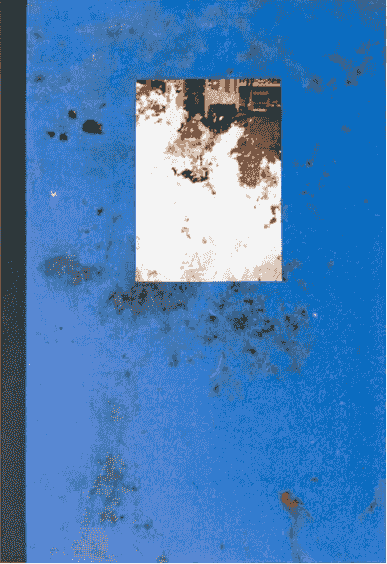
Mayumi Suzuki
- The Restoration Will (With OBI)
2017
"My parents, who owned a photo studio, went missing after the 2011 tsunami. Our house was destroyed. It was a place for working, but also for living. I grew up there. After the disaster, I found my father’s lens, portfolio, and our family album buried in the mud and the rubble.
One day, I tried to take a landscape photo with my father’s muddy lens. The image came out dark and blurry, like a view of the deceased. Through taking it, I felt I could connect this world with that world. I felt like I could have a conversation with my parents, though in fact that is impossible.
The family snapshots I found were washed white, the images disappearing. The portraits taken by my father were stained, discolored. These scars are similar to the damage seen in my town, similar to my memories which I am slowly losing.
I hope to retain my memory and my family history through this book. By arranging these photos, I have attempted to reproduce it."
- Mayumi Suzuki
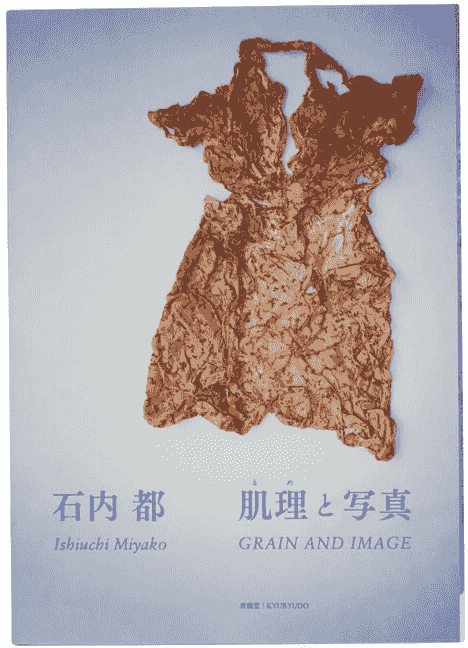
Miyako Ishiuchi - Grain and Image
2017
This is the official exhibition catalogue tracing the 40-year trajectory of Miyako Ishiuchi (born 1947), one of the most highly acclaimed international photographers, notable for becoming the first Asian woman to win the Hasselblad Award in 2014.
Ishiuchi's work, which is lauded for evoking memory from the traces of life left on structures, skin, and personal effects, is often described as a "fabric of memory." Centered on the theme of "Grain (Kime)," this volume contains approximately 240 self-selected works, ranging from early, previously unpublished photographs to her latest series.
The book comprehensively covers her career, from her early landscapes of "towns" and "buildings" in series like Yokosuka Story and APARTMENT, to her post-90s focus on the remains and scars of "people" and "objects" in works like Mother’s, Hiroshima, and Scars. It is an invaluable retrospective that consistently presents Ishiuchi's world, which perpetually explores presence and absence, human memory, and the vestiges of time.Rinko Kawauchi - Composition No.1
IANN 2017
Sanna De Wilde - The Island of the color Blind
2017
Thy Tran - Cacher
2017
“As I try to mask the excess of my sentiment, I’ve come to acknowledge the common ground between desire and denial, pleasure and pain that lies in all human relationships.”
Taken between 2015 and 2017, Thy Tran’s photographs document the intricacies of her relationship with her former girlfriend. Combining the private space and the transient moments of their time together, the tension between connection and disconnection serve as a vantage point, revealing her private world to public eyes in a blended portrait of both the artist and her partner. Obscuring the faces of both herself and her lover, Tran’s images explore the more intimate and obscure details of a relationship, from mundane visits to a supermarket, to the pile of clothes casually thrown on the chair from the night before.
CACHER (from the French for ‘to hide’) derives from Roland Barthes’ A Lover’s Discourse, and serves, as Tran says, as an “act of opening up myself to vulnerability that the photographs release”. Tran’s work serves to remove its subjects at the same time as paradoxically making them explicit; in CACHER, her practice reconfigures the intimate in a language that is uninhibited.
Zanele Muholi - Hail the Dark Lioness
2017
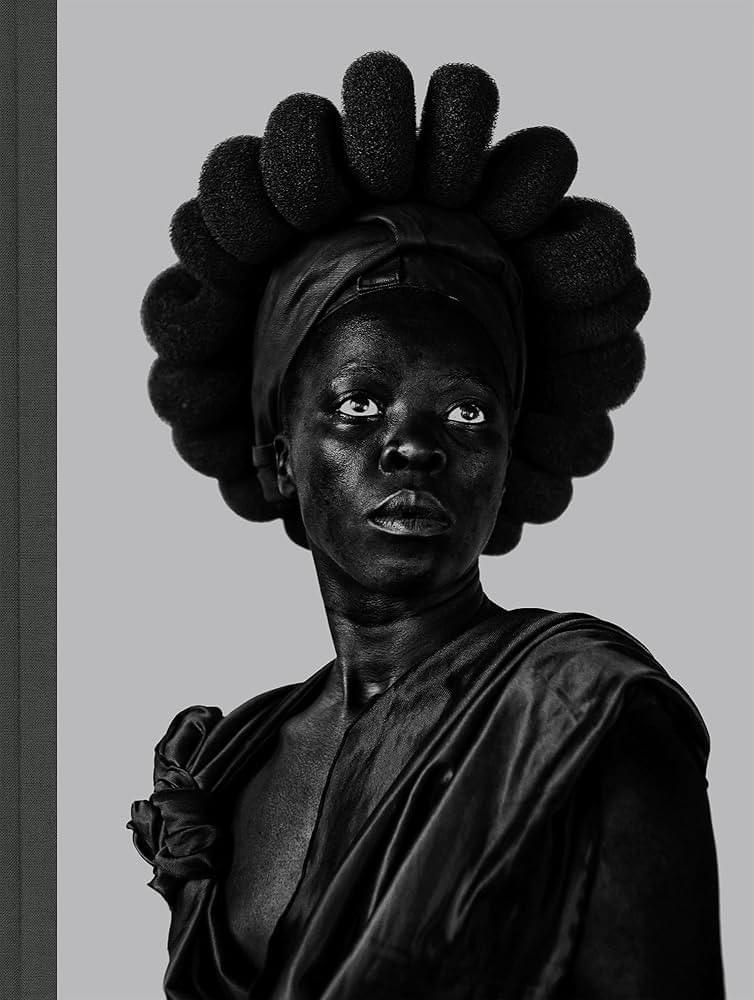
Zanele Muholi: Somnyama Ngonyama, Hail the Dark Lioness is the long-awaited monograph from one of the most powerful visual activists of our time. The book features over ninety of Muholi’s evocative self-portraits, each image drafted from material props in Muholi’s immediate environment. A powerfully arresting collection of work, Muholi’s radical statements of identity, race, and resistance are a direct response to contemporary and historical racisms. As Muholi states, “I am producing this photographic document to encourage individuals in my community to be brave enough to occupy spaces―brave enough to create without fear of being vilified. . . . To teach people about our history, to rethink what history is all about, to reclaim it for ourselves―to encourage people to use artistic tools such as cameras as weapons to fight back.”
With more than twenty written contributions from curators, poets, and authors, alongside luxurious tritone reproductions of Muholi’s images, Zanele Muholi: Somnyama Ngonyama, Hail the Dark Lioness is as much a manifesto of resistance as it is an autobiographical, artistic statement.
Carine Thévenau
- Seasonal Abandonment of Imaginary Worlds
2018
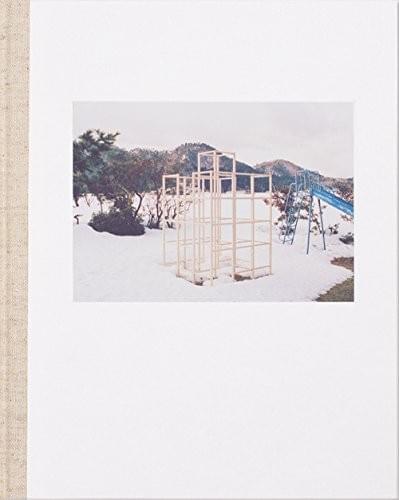
This book comprises a photographic collection by Carine Thévenau of recently deserted playgrounds in rural Japan. Pictured during the winter, the snow-covered playgrounds might arouse a nostalgic sensation, yet a more critical analysis reveals a portrait of a place and offers us a glimpse of space and time paused. Thévenau interprets the emptiness within the playgrounds as a silence or tension that our minds feel compelled to fill, akin to the pause in a musical score or the interval of a theatrical play. These playgrounds are the residue of an ageing Japanese population, revealing economic shifts but also cultural philosophies about nature, respect, waste, and sustainability.
Cho Fang Yu - The Speed of Life
2018
Clementine Schneidermann
- I called her Lisa Marie
Chose Commune 2018
Edén - Bernal Exilios
2018
Exilios is a photobook inspired by the story of three women who, in the middle of their lives and after suffering years of violence, decided to leave their partners and even the whole world.
The book is composed of two interspersed books, creating a narrative that visually builds the work by interweaving the stories of three very different places in Mexico. The landscape and the desing of the pages create a dramatic and poetic scenario of the lifes of these three women who isolated them selves from the world for different reasons, and who are the metaphor to address central issues of identity, gender and the life of women in Mexico.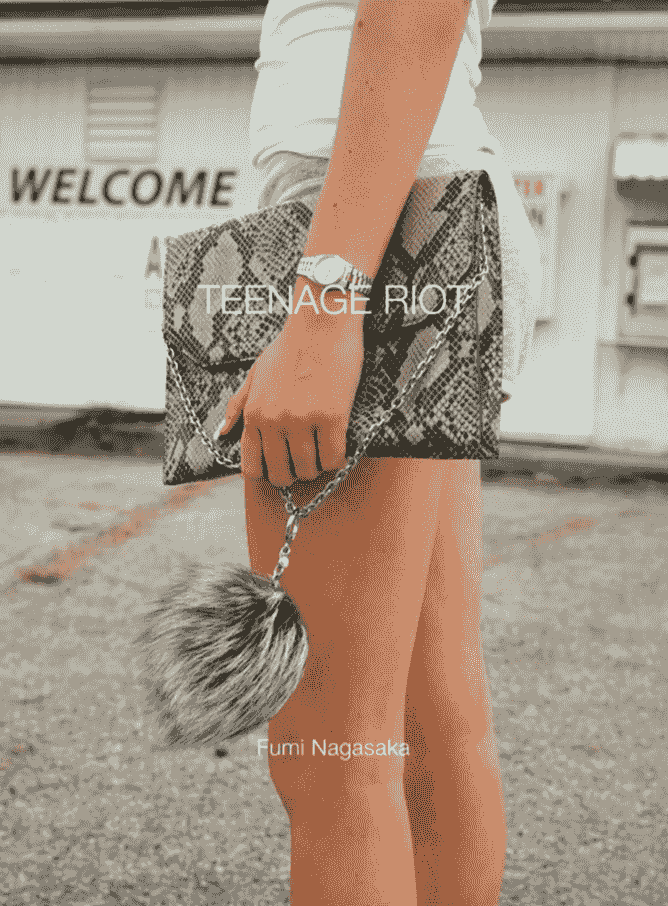
Fumi Nagasaka - Teenage Riot
2018
Teenage Riot is Japanese-born, New York-based street photographer, Fumi Nagasaka’s sophomore book, which showcases portraits taken over the course of several years of four teenage girls from varying backgrounds—a small town in Canada, Brooklyn and Tokyo. With this project, Nagasaka was specifically interested in understanding how upbringings in divergent cultures were reflected in each girl’s personality and interests.The book is a natural progression from her first offering, Untitled Youth, a sizeable collection of portraits taken against plain backgrounds which focuses in on her teenage subjects, seeking to capture their purity and innocence. With Teenage Riot, Nagasaka expanded on her process, pulling the camera’s viewpoint out and allowing her subjects’ worlds to contribute to their visual story.

Genevieve Leong
- Our breaths are short this breeze untamed
2018
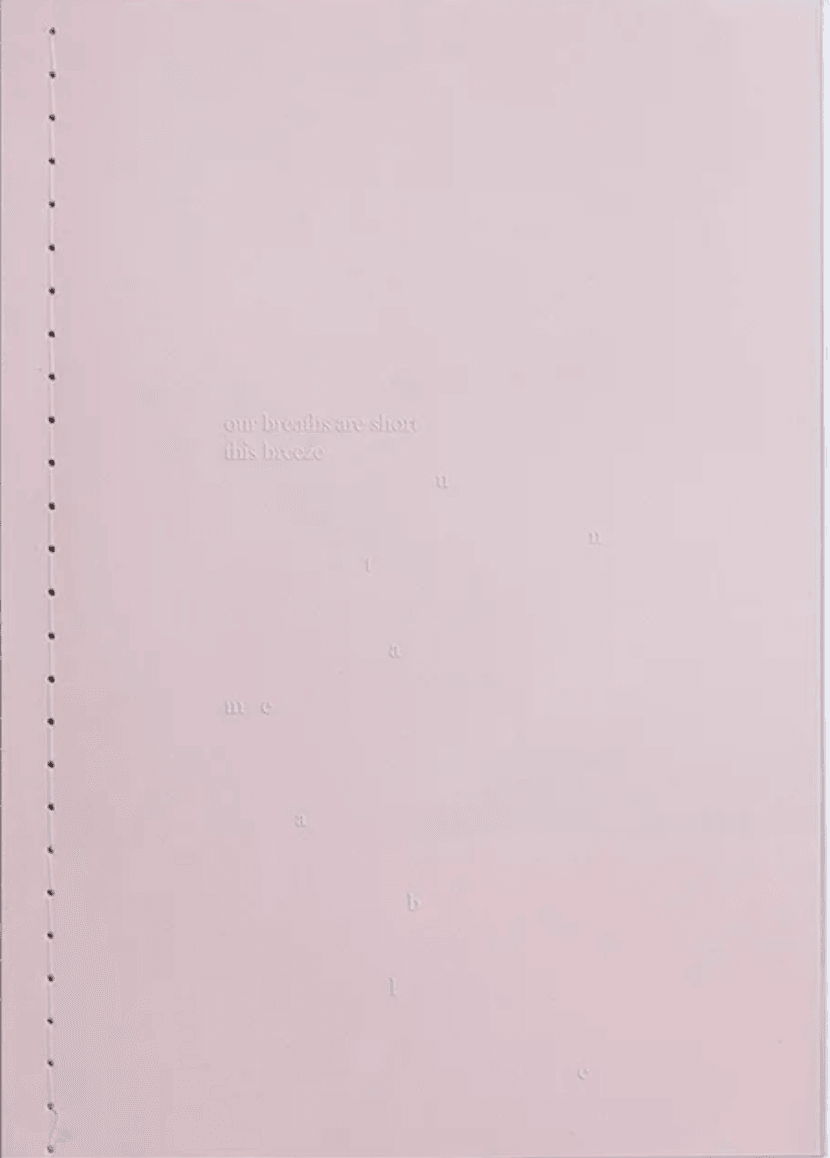
This work is a contemplation upon an attempt to understand the wind. The wind, a divine force impossible to go against, embodies a signifier of change – be it a small breath, the rustling of leaves, or a large hurricane. Beyond the physical, this force can cause an internal change, such as the change of a state of mind. The work brings about a play between certainty and confusion, relating to the ambiguityof the wind.
The book our breaths are short, this breeze untameable is printed in an edition of 100 copies and is available for sale via THEBOOKSHOW, Singapore and The Photographers' Gallery Bookshop, London, or directly through the artist.
GUO Ying Guang - The Bliss of Conformity
2018
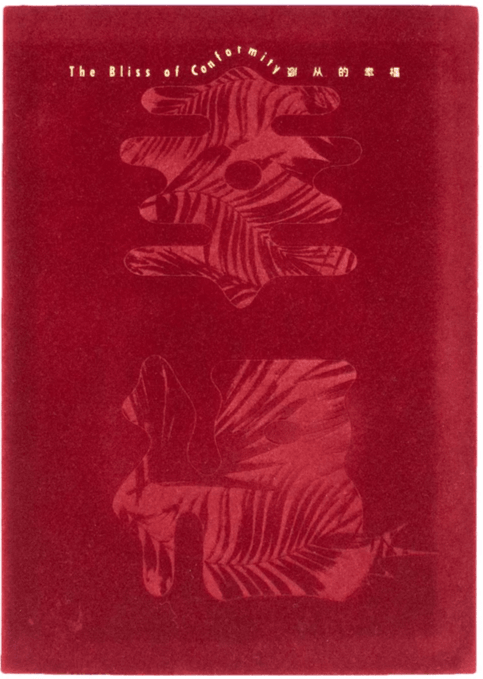
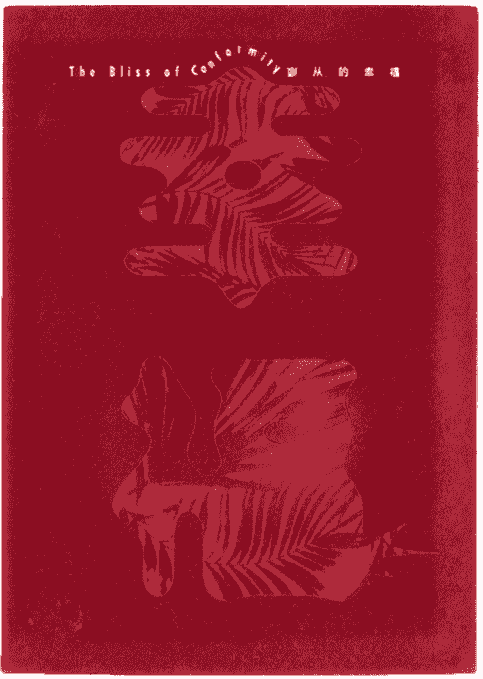
The Bliss of Conformity is a photography-based mixed-media series that combines elements of video, installation and artist’s book. In this work, Guo Yingguang explores arranged marriages in China and the emotionally distant coexistence between arranged couples from both abstract and concrete viewpoints. Starting from her own individual experience and the contemporary social experience at large, Guo Yingguang combines documentary photography and creative artistic practices to create carefully constructed, highly contrasted visual structures that challenge stereotypical notions of women in a complex socio-cultural consciousness.
Hitomi Watanabe - Provoke publication reprint
2018
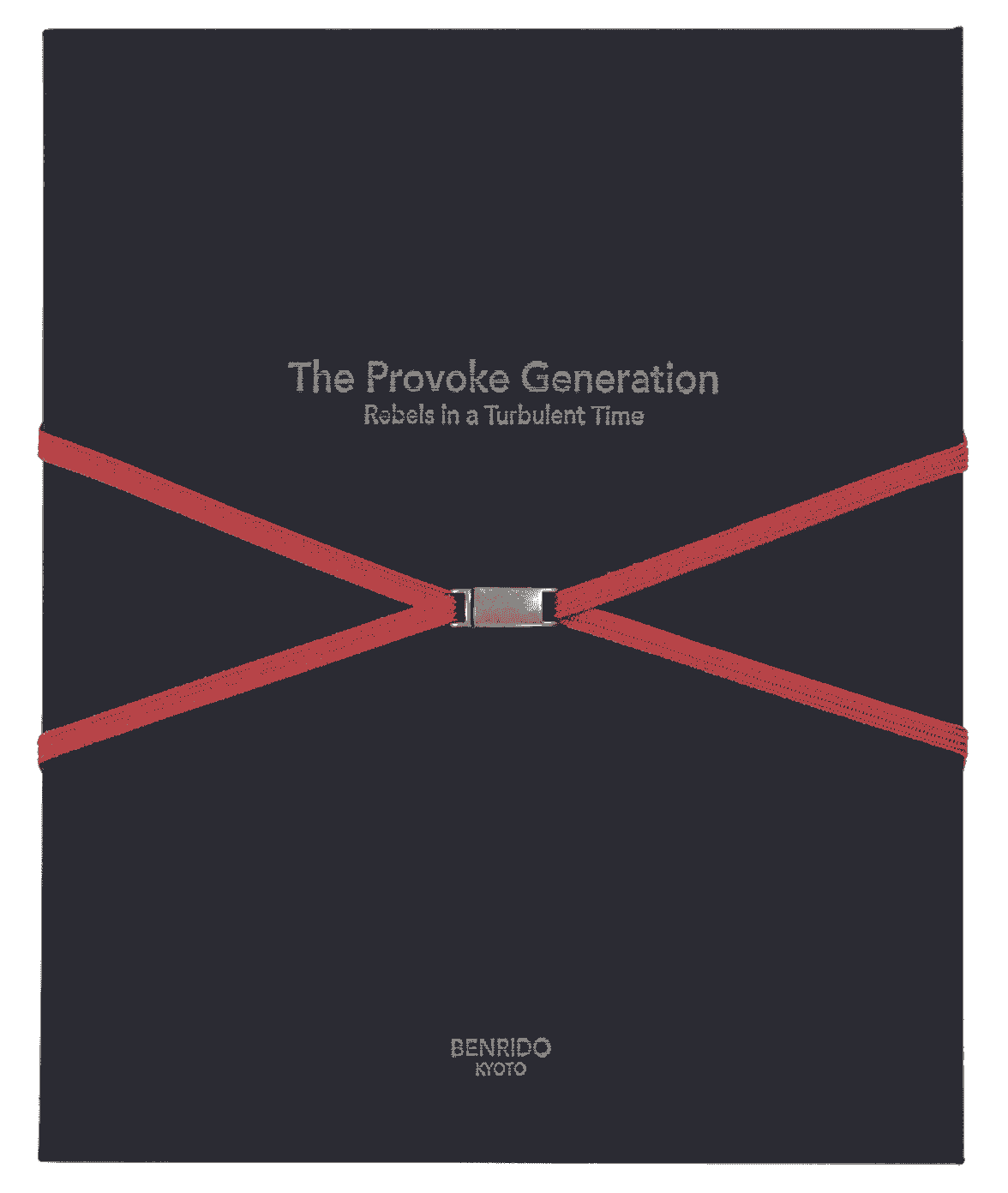
Featuring six artists (each represented with twelve collotype prints) who were either directly involved or influenced by the ideas, philosophy and approach of the legendary magazine “Provoke”, as well as essays by Simon Baker, Ryuichi Kaneko, Kotaro Iizawa and John W. Dower, “The Provoke: Generation Revels In a Turbulent Time” examines and celebrates the lasting impact of the Provoke movement on Japanese photography.

Jenny Rova - I would also like to be-
2018
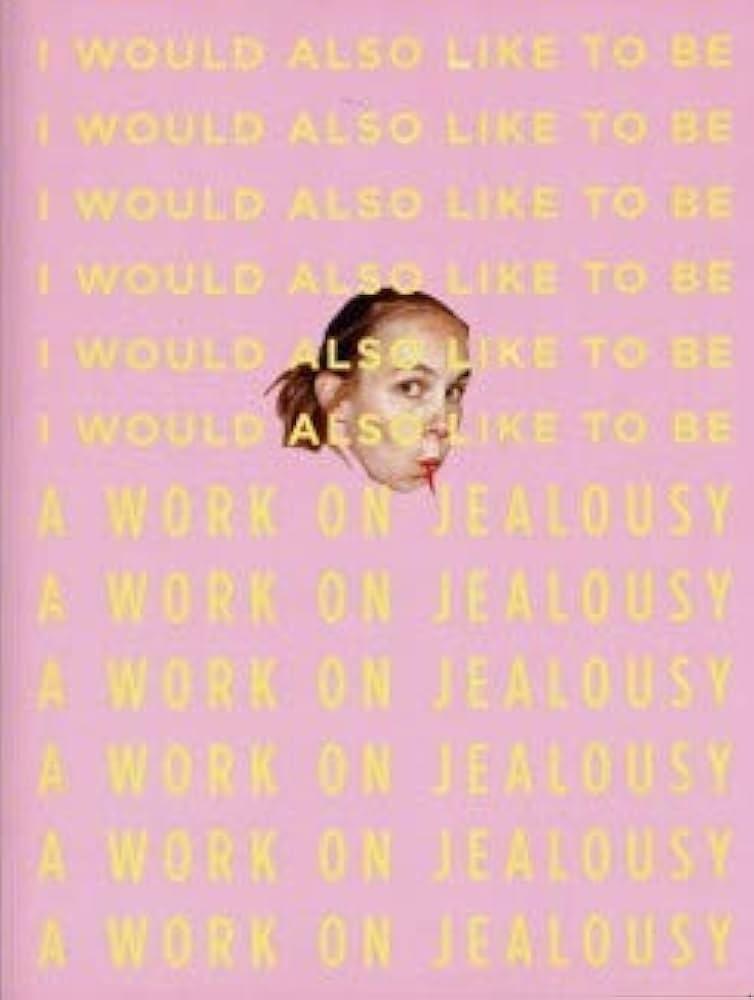
"I’m following and spying on my ex boyfriend and his new girlfriend. I pursue them on Facebook, downloading all the pictures they have been uploading there of themselves and each other. I’m placing myself in the new girlfriend’s position, imitating her pose, expression and dressing myself in the same outfit. Photographing myself in the same light as in the picture of them. The figure of me I glue on to the original picture, covering the girlfriend. In this way I build a dream life of my own on top of theirs. During the process of taking the new girlfriends poses, I’m once again, briefly a part of my ex love’s life and I can imagine how it would be to be her."
Katherine Longly
- To tell my real intentions, I want to eat only haze like a hermit
2018
In photographs, interviews, emails, graphics, and illustrations, Belgian artist Katherine Longly investigates the Japanese relationship with food and the body in Japan. During several residencies in Japan, Longly met and spoke with ten people of different ages and backgrounds about their experiences with food and weight. Each of the book's ten chapters takes a different approach - 34-year-old Martijn, for example, talks about the easy availability of snacks and sweets, highlighted by photos taken in bakeries, conbinis and supermarkets; other chapters focus more on the body or, in the case of anorexia survivor Marina, opt for abstract images and focus on her words. At the intersection of art and anthropology, this project invites everyone to dig to discover where their relationship to food and their body is rooted. The book includes a "research notebook" filled with additional notes and correspondence, as well as an afterword by cultural anthropologist Maho Isono. “Our relationship with food is complex. It can reveal itself as a formidable tool for managing our emotions, and it’s also a privileged witness to our social and family history. And it’s fundamentally inseparable from the relationship we have with our own bodies. Between control and pleasure, my connection to food is still haunted by the ghost of a little girl who was a little too round. The image of the self finds its foundations in childhood – with all its strength and tenacity.
I set out to explore where our relationship with food is rooted, outside of my own experience. Collecting statements from a place far from my own references allowed me to understand my own story, with a necessary step back.”
― Katherine Longly’s foreword
Ke Peng - Salt Ponds
2018
Ke Peng, who was born in Hunan Province and grew up in Shenzhen in China, set her creation in the rapidly developing urban space to awaken other people's perception by projecting her personal experience onto the fragile and sensitive parts of the big city. Essentially The Salt Pond is more like an ecosystem that may be slightly out of balance due to being involved, where the situation of the pond and the fish will eventually refer to people who is trapped in the city but also dependent on the excitement and security it brings.

Mary Frey - Real Life Dramas
2018
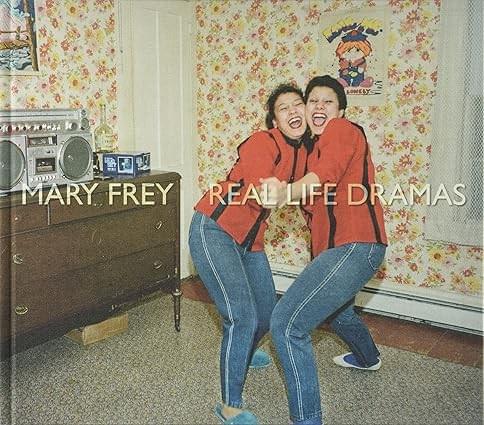
Real Life Dramas is a time machine, its images transporting us 35 years into the past, transplanting our reality to an indeterminate place in the United States. Mary Freys hyperreal photographs capture charged banalities on large-format film, pictures of middle-class children, adolescents, and adults that together seem less of a reportage than a psychogram. She offers drama, in the sense of interpretations of human experience that are cogent and valuable on their own terms, but not the dramatic. The images are positioned somewhere between snapshot and enactment, intimacy and distance, yet nothing aspires or demands to be taken as more than it actually is.
Miyaki Miyazaki (Izumi ) - Me and Me
2018
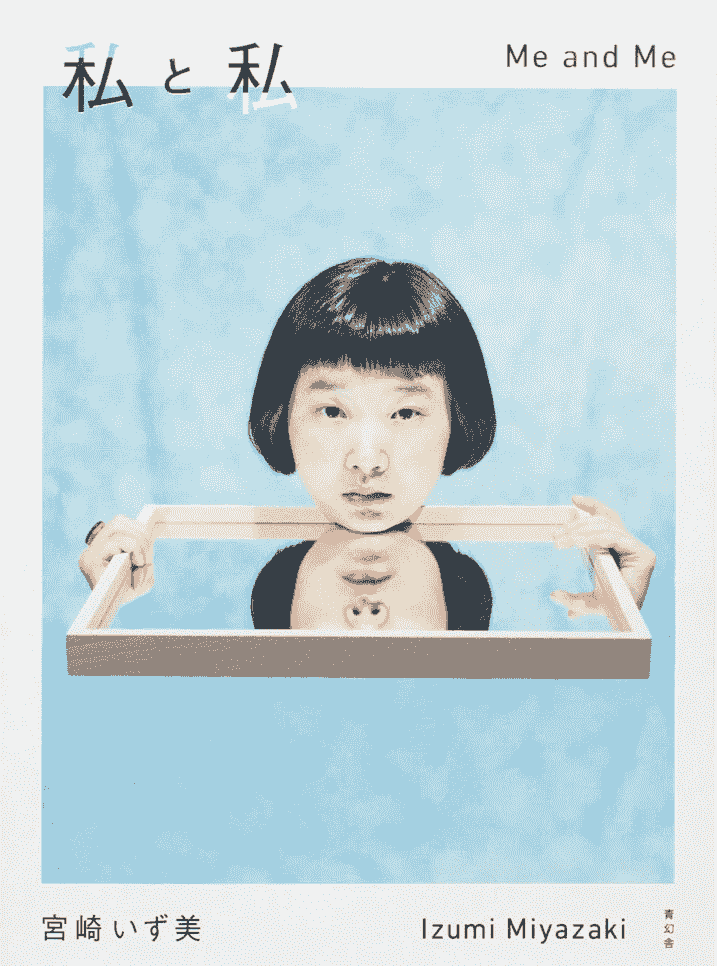
“Me and me” — surreal self-portraits of a bob-haired young girl; cheerful yet decidedly ironic.
In her many playful, imaginative photographs, Izumi Miyazaki dissects and disturbs familiar scenes and landscapes, tricks her viewers, surprises with her idiosyncratic ideas. Beneath the poppy colors and all the playing around lies the sense of someone not (yet) at home in the world, not accepting what’s expected of her.“When this state of being at odds with myself continues for a while, there is that other ‘me’ that has witnessed the whole scenery and comes up to encourage me to have faith in myself. […] I am going to savor the happy feeling of being able to be myself, and continue to enjoy myself as hard as I can.”
— From Izumi Miyazaki’s afterword
Nana Chen - Chungking Mansions
2018
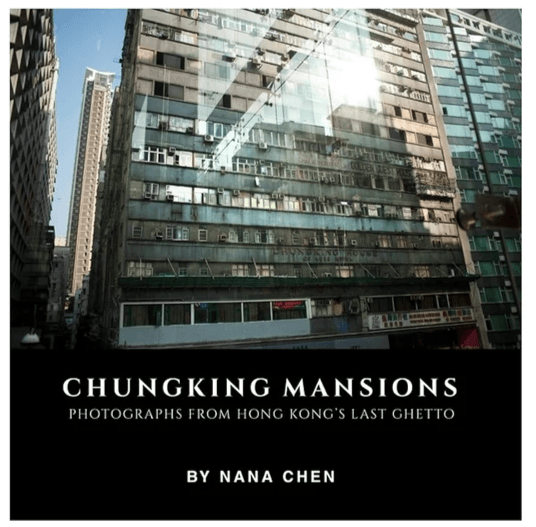
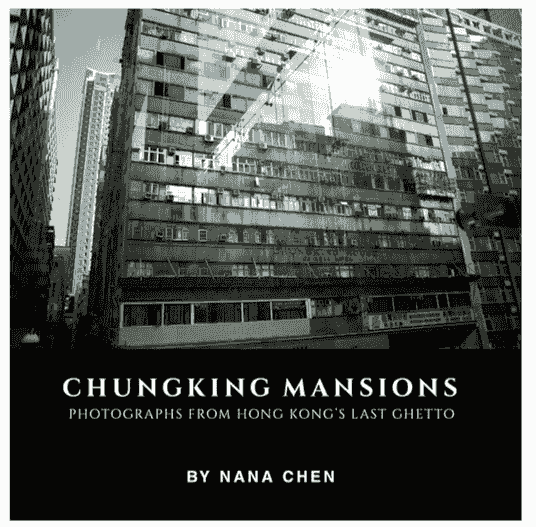
Squatting amid the luxury hotels and malls of modern Kowloon, Chungking Mansions resembles the dirty vent of a giant subterranean machine. This Hong Kong landmark is a hotbed of criminality and home to pimps, hookers, thieves and drug pushers. The five 17-storey towers also offer the city’s last low-rent refuge for asylum seekers and immigrants coming to start a new life.
Nepalese guesthouse owners rent out rooms to Bangladeshi workers, and Pakistanis sell mobile phones to Nigerian traders who hire Indian cargo companies to ship them home. Food stalls fill the air with the savory aromas of international cuisine, and more than 200 guesthouses, as well as two floors of shops selling black-market, counterfeit and bargain goods, establish this unique place as a global hub of trade and multiculturalism.
In 2009, shortly after a Canadian tourist disappeared from Chungking Mansions without a trace, photographer Nana Chen began wandering the corridors. Using her camera as a guide, she discovered the Chungking Mansions not visible to the naked eye: the beating pulse that gives this notorious destination its hypnotic appeal. With compassion and courage, Chen sought to craft a portrait of Hong Kong’s last ghetto and its inhabitants before its vibrant character is erased forever by the inevitable march of progress.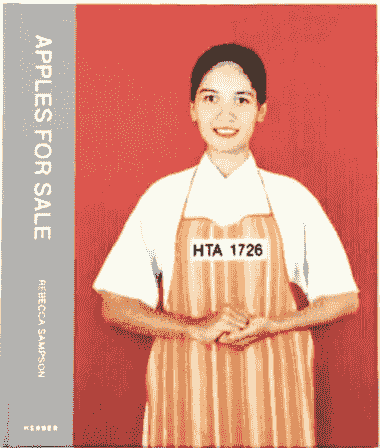
Rebecca Sampson - Apples for sale
2018
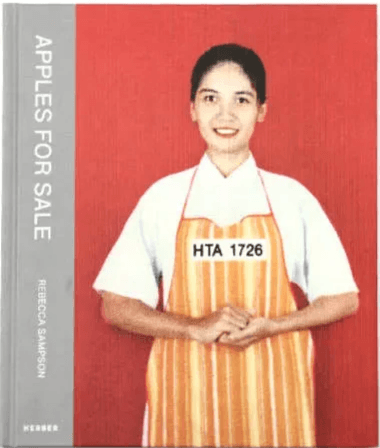
In Apples for Sale, Rebecca Sampson (*1984) sheds light on the life of Indonesian housemaids, who work in Hong Kong as second-class migrants and live under precarious conditions in a parallel female society. In an exclusively female social environment, they begin a sort of role play, in which the male roles of tomboys are assumed and lovingly decorated dolls replace missing children. Since the domestic workers are only allowed to move freely around Hong Kong one day a week, their social and cultural sphere is increasingly shifted to the virtual world of Facebook. There, no limits are put on their living out their personality individually. The new publication gives viewers 360-degree access to this unique and unsettling world.
Various- GUFTGU
2018
Wendy Marijissen - Always the guest
Self-Published 2018
"What does it mean to belong somewhere? How does a young woman from Belgium end up feeling more at home in a country like Pakistan, a place so different then the one she comes from?
In this personal book Wendy Marijnissen tries to answer some of these questions.
Always the guest is a story about loss, motherhood, about home and what and more importantly who cross your path and help shape your identity. "
Woong Soak Teng - Ways to Tie trees
2018
Tree-staking, like our innate human instinct to control, is ubiquitous yet largely unnoticed.
Featuring a diversity of (sometimes unorthodox) approaches to the art of tree-tying, this work presents an intimate encounter with the trees and their much-overlooked structures in the garden city of Singapore. Similar to many cities around the world, trees are uprooted and relocated to conform to a controlled cityscape determined by urban-planning. In an attempt to construct a productive and aesthetic living environment for ourselves, nature has long since been subjected to manipulation at the mercy of our hands.
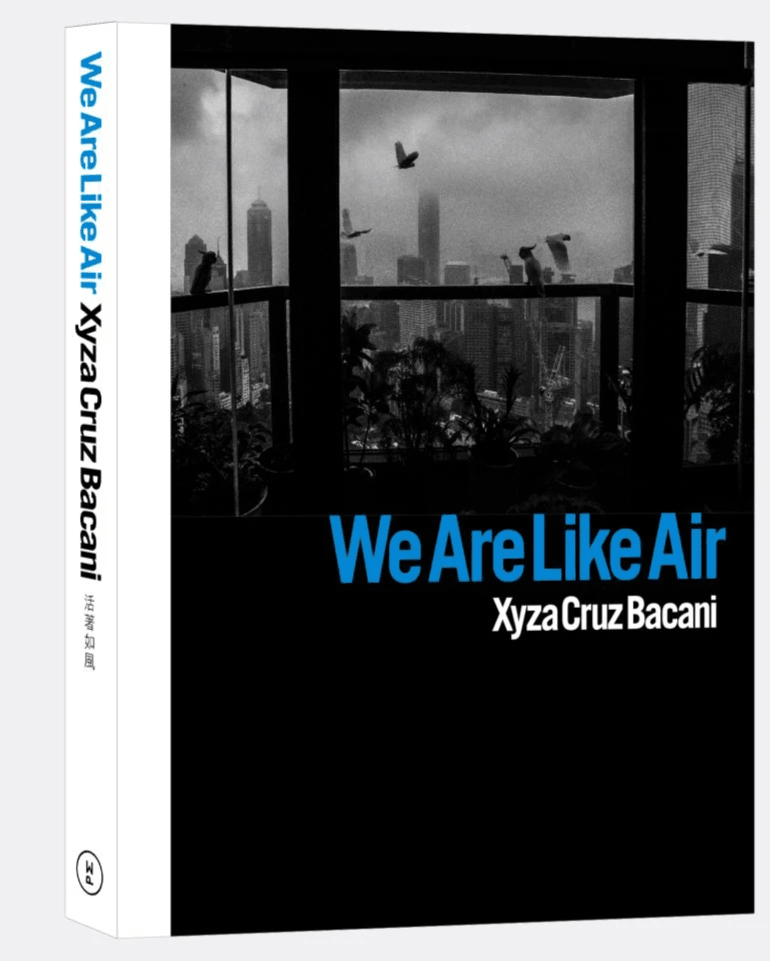
Xyza Cruz Bacani We Are Like Air
2018
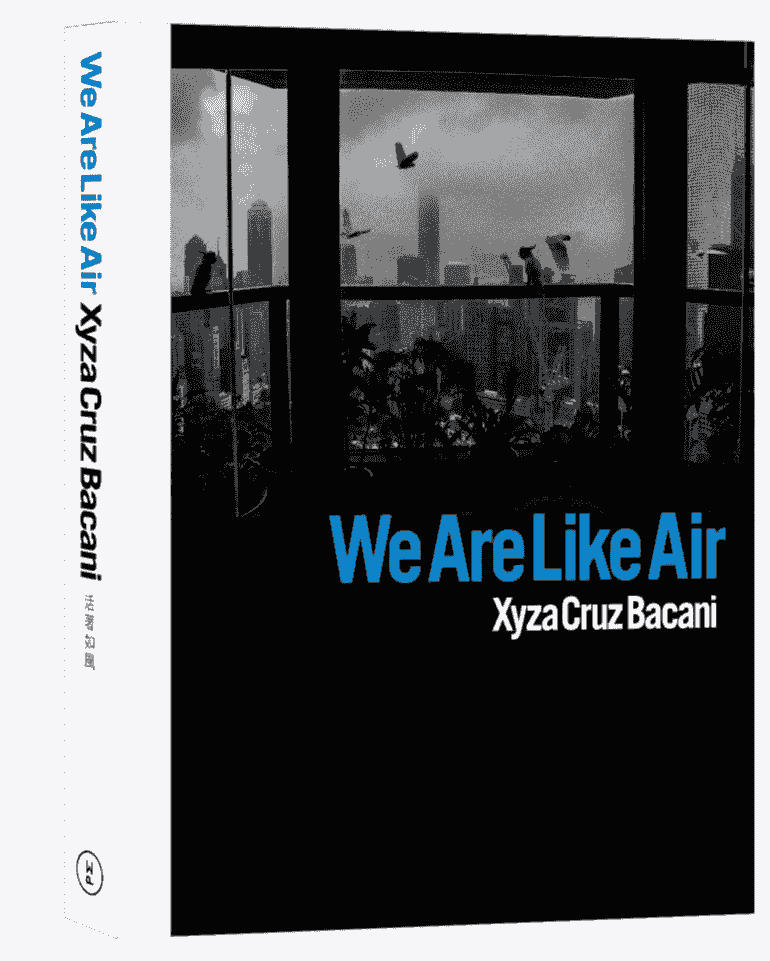
In this book, Bacani, who used to be a domestic worker herself, reclaims the story of the migrant worker that has been told countless times by others. This time around, she is telling their own story – not as victims but as champions who have overcome the many hardships life has tossed at them as they leave their families behind in their home country. The book portrays the experience of millions of mothers, daughters and families whose lives have been disrupted by migration. “We Are Like Air” because migrant workers are often treated like air, invisible but important.
Amak Mahmoodian - Zanjir
2019
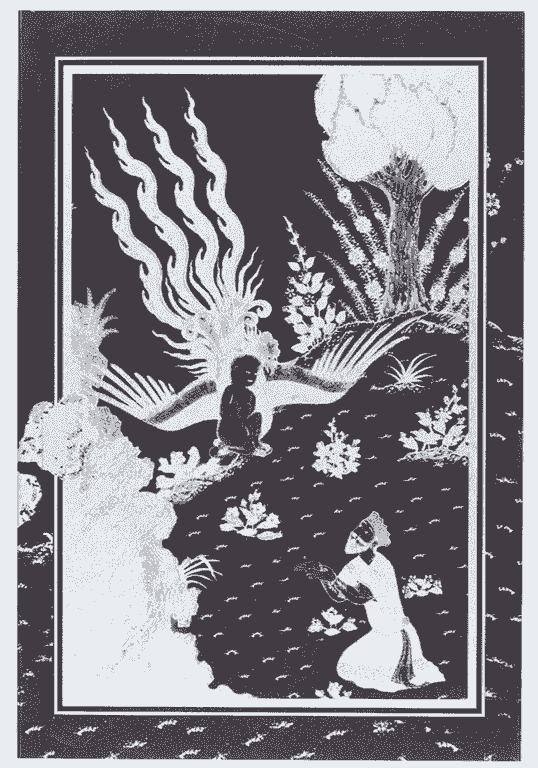
"anjir is a conversation imagined between the Persian princess and memoirist Taj Saltaneh (1883 - 1936) and I.
In 2004, I visited the Golestan museum in central Tehran to begin work on academic archival research. The museum was once home to Qajars, and to the King’s wives and relatives. The photographs in the museum’s archives, amongst others, include those taken between 1860 and 1896 by Nasr al din shah, the King during the Qajar Era, when photography first arrived in Iran. These archival photographs became a cornerstone of the project due to the multiple potential interpretations and readings of the imagery. I decided to tell my story through that of others – those who lived in the past and yet their stories still exist in the present."Clare Gallagher - The Second Shift
Jelgavas Tipogrfija 2019
The Second Shift is the term given to the hidden shift of housework and childcare primarily carried out by women on top of their paid employment. It is physical, mental and emotional labour which demands effort, skill and time but is unpaid, unaccounted for, unequally distributed and largely unrecognised.
Hidden in plain sight and veiled by familiarity and insignificance, the second shift is largely absent from photographs of home and family. This work is an attempt to recognise the complexity and value of this invisible work. It is a call for resistance to the capitalist, patriarchal and aesthetic systems which ignore it.
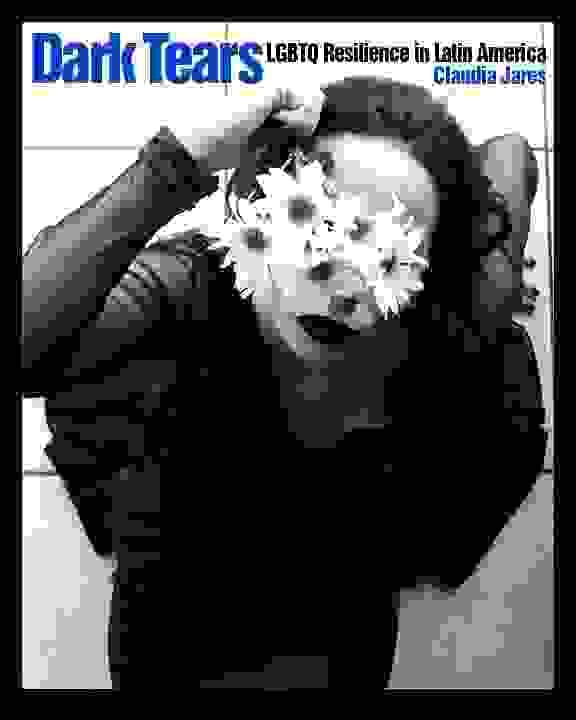
Claudia Jares
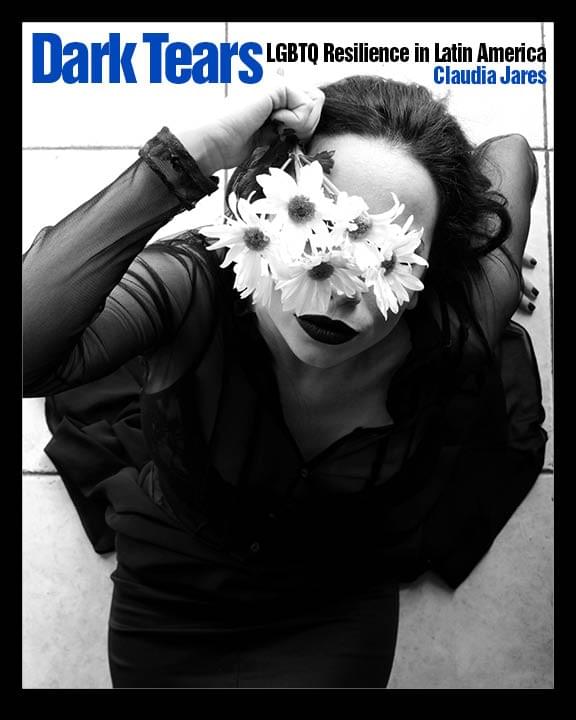
- Dark Tears: LGBTQ Resilience in Latin America
2019
"In Dark Tears, award-winning Argentinian photographer and performance artist Claudia Jares takes her lens to the reality of queer experience in Argentina, Venezuela, and across Latin America, exploring questions of sexuality, religion, and identity with the raw eroticism that is the hallmark of her style. Here she tells the stories of a number of people struggling to come to terms with their identity in a region that, despite much progress in LGBTQ rights in recent years, still moves to a strongly conservative Christian heartbeat that condemns same-sex relations and reveres the institution of the heteronormative family"
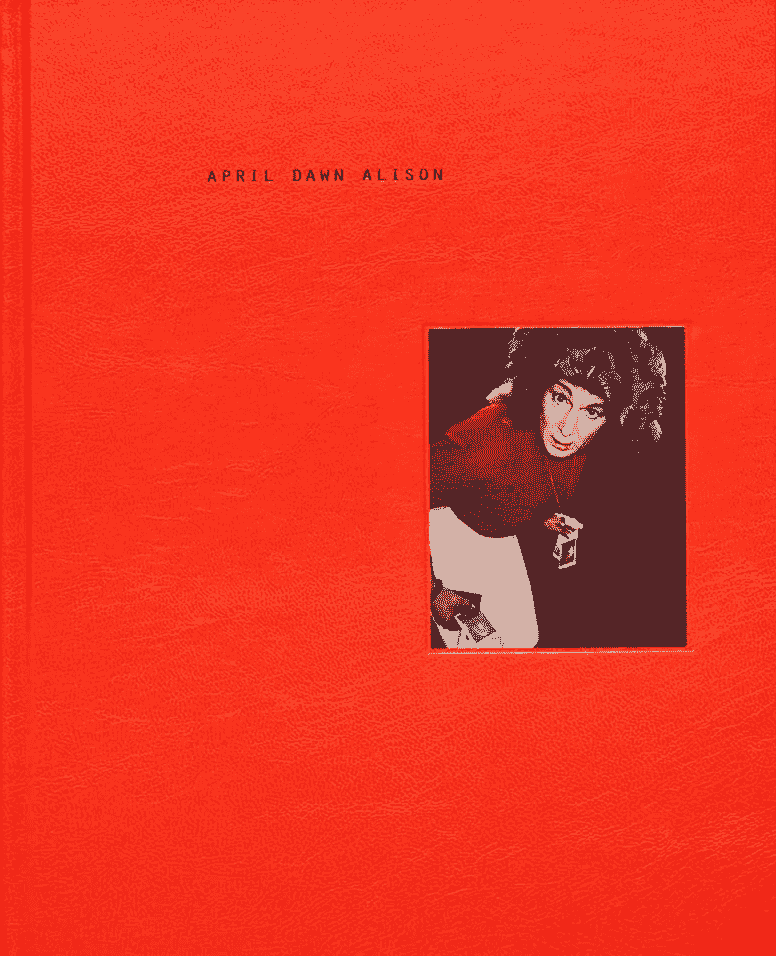
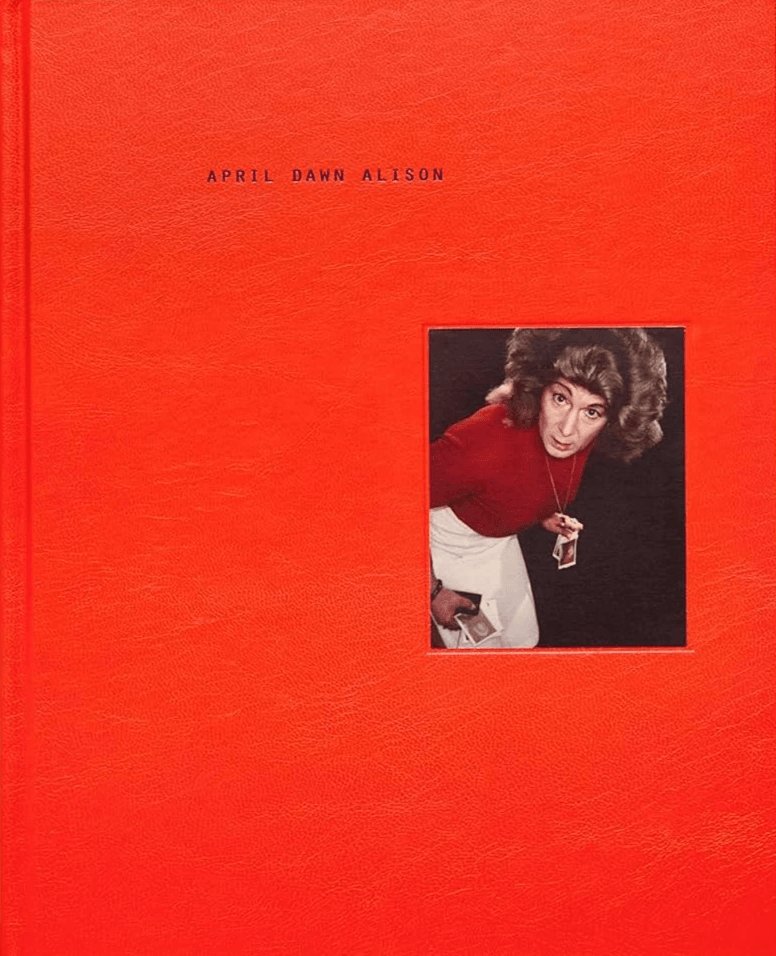
Erin O'Toole - April Dawn Alison
2019
Made over the course of some thirty years, the photographs in this book depict the many faces of April Dawn Alison, the female persona of an Oakland, California based photographer who lived in the world as a man. This previously unseen body of self-portraits, which was given to the San Francisco Museum of Modern Art in 2017, begins tentatively in 1970s in black-and-white, and evolves in the 80s into an exuberant, wildly colourful, and obsessive practice inspired by representations of women in classic film, BDSM pornography and advertising. A singular, long-term exploration of a non-public self, the archive contains photographs that are beautiful, hilarious, enigmatic, and heartbreakingly sad, sometimes all at once.
With essays by Hilton Als (American writer and theater critic for The New Yorker), Zackary Drucker (American transgender multimedia artist, LGBT activist, actress and producer of smash Amazon series Transparent) and Erin O’Toole (associate curator of photography at the San Francisco Museum of Modern Art).

Libuse Jarcovjakova - Evocativ
2019
"Evocativ" (2019) by Czech photographer Libuše Jarcovjáková is an unflinchingly raw photographic document of life in Prague during communist rule (1970-1989). Capturing the city's underground culture with brutal honesty, the work mixes poetic beauty with despair through candid flash photography that reveals intimate moments of street life, work, love, and sexuality. Shortlisted for the 2019 Aperture PhotoBook Award, this powerful collection stands as both a personal diary and historical testimony to a generation living through political oppression, distinguished by its unpretentious style that refuses to romanticize or look away.
Laura El-Tantawy - A Star in the Sea
2019
A Star in the Sea is an overture for embracing the unexpected. The photographs, text, and title pertain to three independent, personal life events: A love story; my first and only trip to my place of birth in the UK & a vision on a beach in Italy. It is inspired by a desire to redefine my relationship with the ideals of success & happiness. In this context, A Star in the Sea is an opportunity to celebrate imperfection — an artistic gesture to have faith in the Universe.
The book is conceived as an artistic object demanding intimacy — something you want to protect & treat with care. Each book comes in a custom handmade Batik pouch. A collectible edition of 26 Batik fabric bound box sets, each including a copy of the book & one of the original 26 polaroids from the series will subsequently
be released in late June 2019.
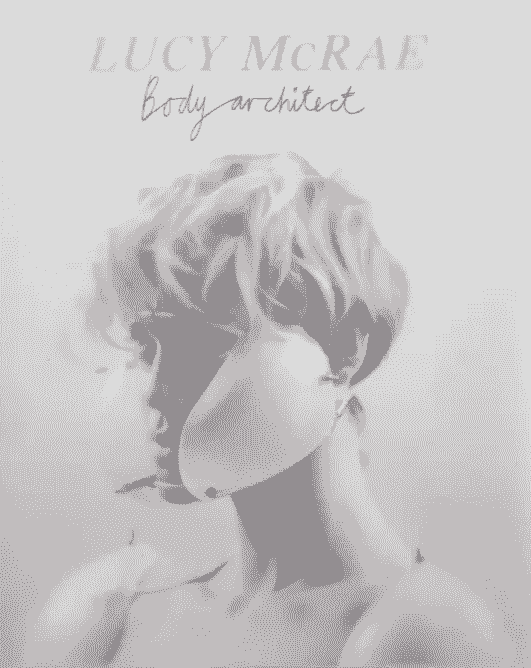
Lucy McRae - Body Architect
2019
Science-fiction artist and speculative designer Lucy McRae occupies a unique space in her field. Taking the body as her central focus, she explores how human biology might evolve with the assistance of design, emotional reconditioning, molecular biology and technology. These concerns are presented through the medium of video, photography and installation. This volume includes an interview by the NGV’s Simone LeAmon, The Hugh Williamson Curator of Contemporary Design and Architecture, and an adjunct professor in the School of Design, RMIT University, Melbourne; and texts by Dr Adam Nash, Associate Dean of Digital Design at RMIT University’s School of Design; and Dr Bronwyn Lovell a
science-fiction poet and scholar.
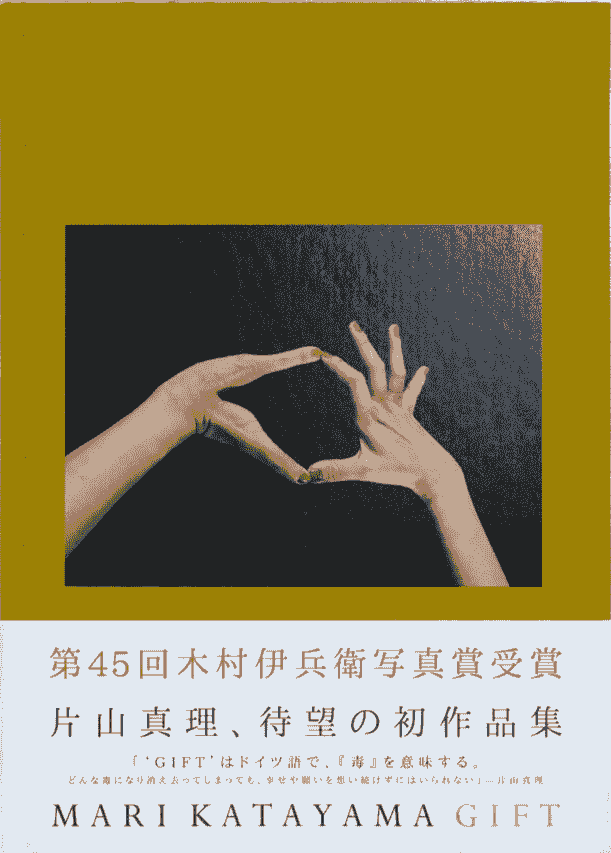
Mari Katayama - Gift
2019
“Gift”, Japanese artist Mari Katayama’s first photobook, is a retrospective of works made since her debut in 2005 and a chronicle of her evolution as an artist. Katayama, who was born with only two fingers on her left hand and had her lower legs amputated at the age of nine due to tibial hemimelia, creates her works in dialogue with her body. The book begins with photos of objects – prosthetics, intricately decorated and embroidered and made of plastic or cloth or other materials – photographed in isolation first before Katayama appears before the camera as well. Her photographs are a fascinating, complex play between sculpture, self-portrait, documentation, self-assertion and self-expression.
“The world is a big place, and we can do anything in it, but it is all mapped out, and we are all going to die one day. So here I am, spending another day between endlessness and limitations, against a backdrop that never changes.” — from Mari Katayama’s foreword
Natthaya Thaidecha - Eclipse
Bad Eyes Photo 2019
Where does light go to escape? Does it settle itself in between the crests and troughs of shadows? Or fly fluid- light and amorphous. In a quest for answers, we set-out to capture the uncertainty that lingers amidst pain and fear, in one’s own subconscience.
The search culminated in the form of a project titled, Eclipse, that is merely one chapter in an otherwise long journey. The photographs attempt to communicate our collective pursuit for identity and belonging, often shrouded by an intense longing. Eclipse is a mirror, wistfully turning a collective stream of consciousness, into something more tangible. Shedding all forms of inhibition, we made images in Thailand, Vietnam, Bali, and Spain over the span of a year- both individually, and together.
Navigating through Natthaya’s paralysing fear of drowning, and Daniel’s struggle to come to terms with his mother’s passing, we found solace in the art of image-making, devoid of boundaries. Together, we traversed to find the light that exists in the deep dark ocean, despite its bitter cold, and the courage it takes to revisit the land where Daniel’s mother is buried.
Eclipse, is a metaphor, speaking of a darkness that’s temporary. Even as the sun is engulfed by the shadow of the moon, we find solace in the impermanence of that blinding black, which will eventually end. Over the past year, we have drifted through various phases of “being” and fought battles we were otherwise cowering from. Initially, the photographs weren’t a part of a larger plan, but just a means of experiencing who we were at that point of our lives.
As Natthaya’s unstructured style, and Daniel’s experimentative fluidity spills onto the pages of Eclipse, we’ve arrived at a place of acceptance. Closure from the unknown, and seeking whispers from moments yet to come.
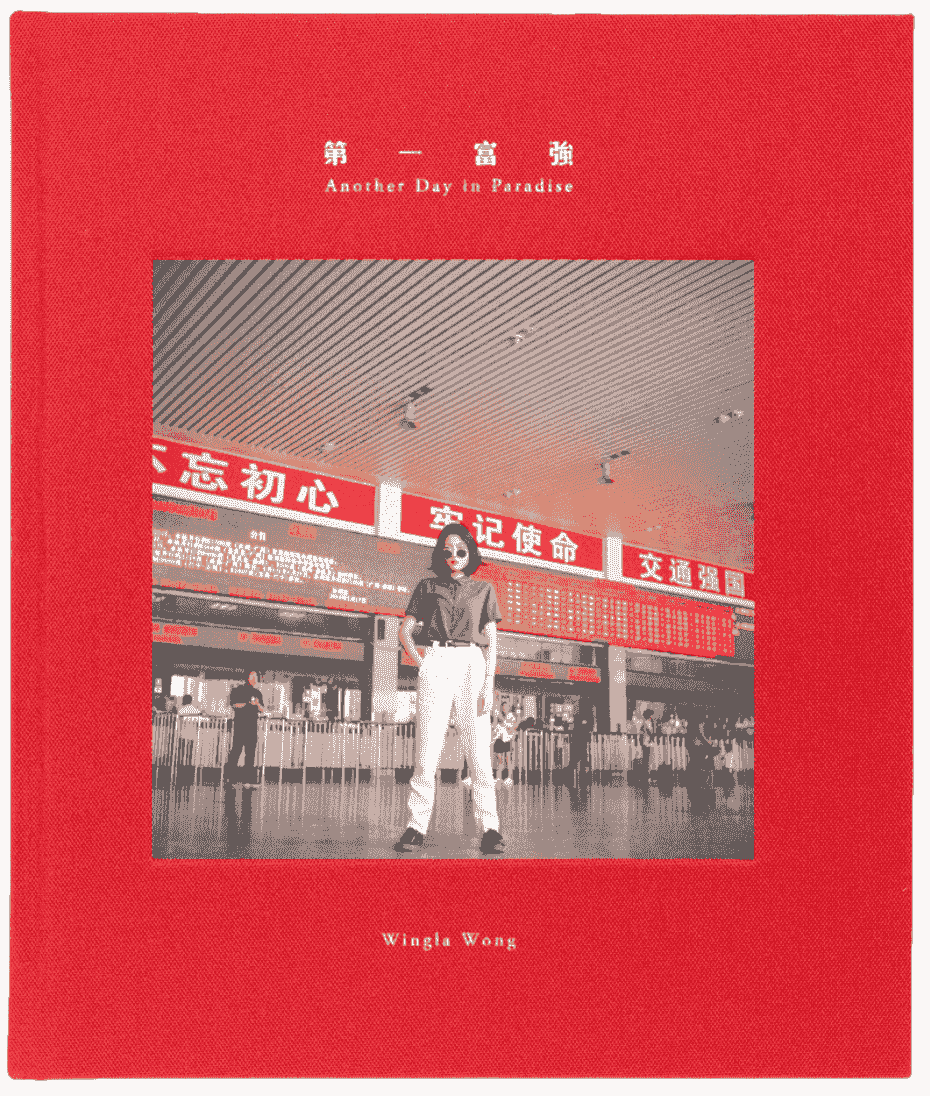
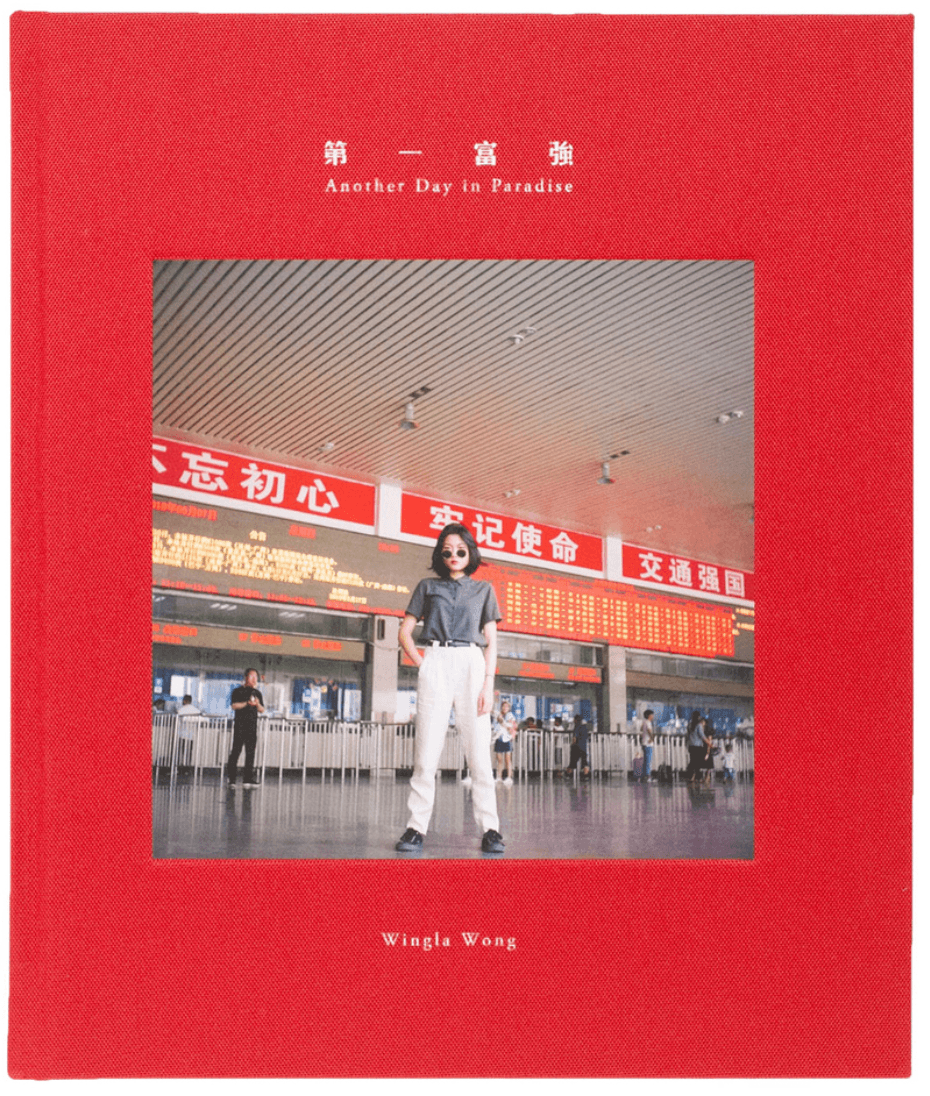
Wingla Wong - Another Day in Paradise
2019
“It was a long journey and a very pleasant trip.”
In 2018, Hong Kong-based photographer Wingla Wong and her friend Rita visited the Chinese mainland. They “went to Sichuan to visit relatives, Guangzhou to see friends, and Guilin for sightseeing,” with Wingla Wong taking photographs of Rita during their journey. Their photographs—collected in the photobook “Another Day in Paradise”—reflect and play with complicated relationship pairs such as city/countryside, youth/decay and, more specifically, Hong Kong/China and also display Wingla Wong’s exceptional eye for a sensual female eroticism.
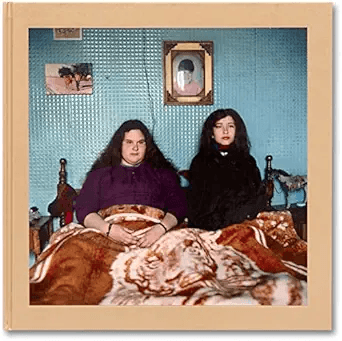
Alessandra Sanguinetti
- The Adventures of Guille and Belinda and The Illusion of an Everlasting Summer
2020
This book presents Alessandra Sanguinetti’s return to rural Argentina to continue her intimate collaboration with Belinda and Guillermina, two cousins who, as girls, were the subjects of the first book in her ongoing series, The Adventures of Guille and Belinda and The Enigmatic Meaning of Their Dreams.
In this second volume, The Illusion of An Everlasting Summer, we follow Guillermina and Belinda from ages 14 to 24 as they negotiate the fluid territory between adolescence and young adulthood. Still surrounded by the animals and rural settings of their childhood, Everlasting Summer depicts the two cousins’ everyday lives as they experience young love, pregnancy, and motherhood - all of which, perhaps inevitably, results in an ever-increasing independence from their families and each other. Similarly, we can sense a shift in Sanguinetti's relationship to the cousins and the work they make: from insular childhood collaborators to three women with lives branching in different directions. Though the passage of time is one of the most palpable tensions at work in these photographs, An Everlasting Summer deepens Sanguinetti's exploration of the timeless, universal language of femaleintimacy and friendship.
Annie Hsiao-Ching Wang
- Reframing Motherhood
Bo Books 2020
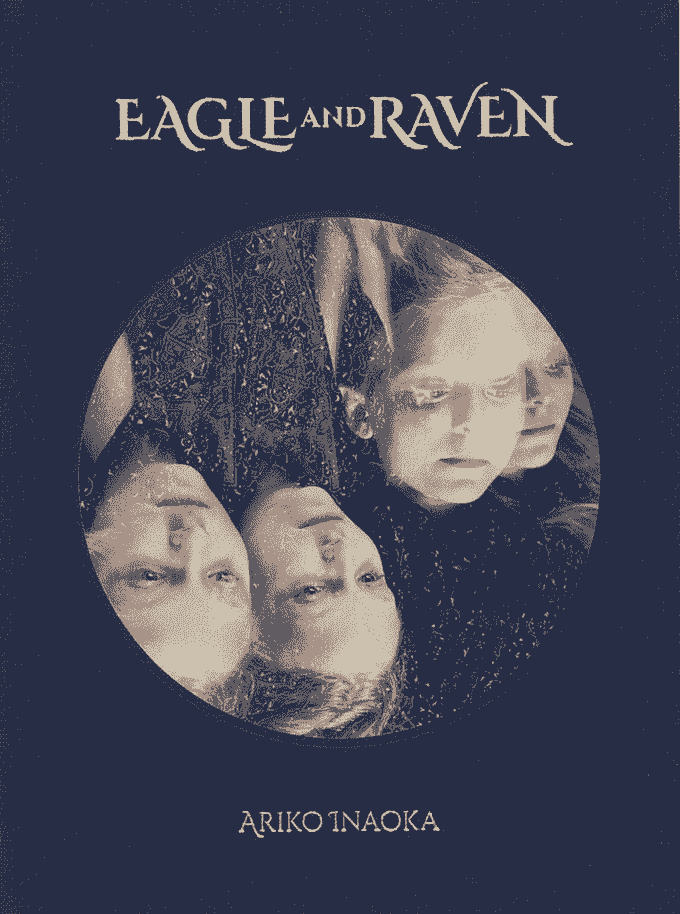
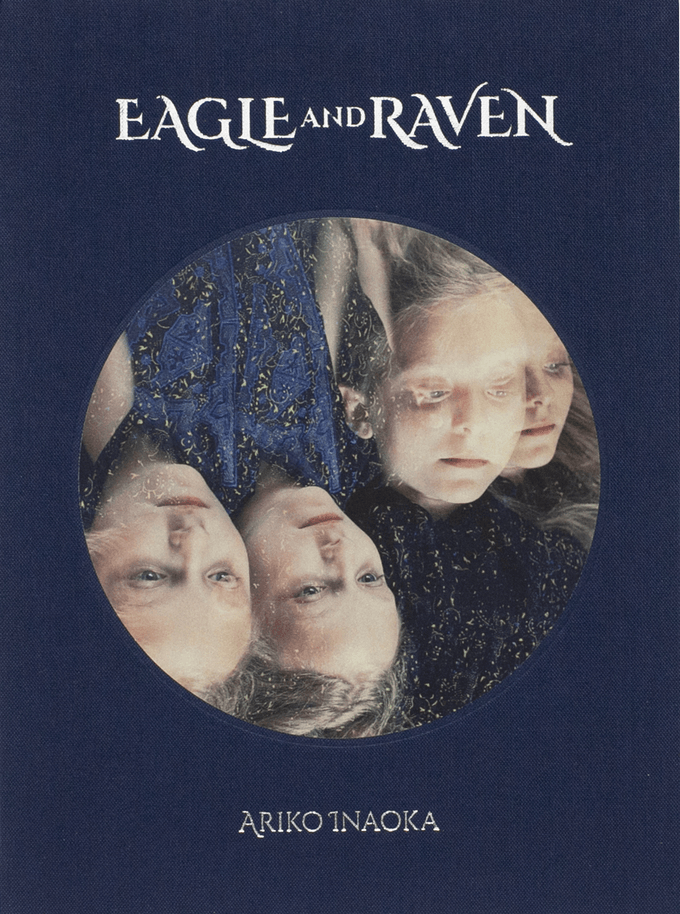
Ariko Inaoka - Eagle and Raven
2020
This is so much more than a photography book; it’s a seven-year chronicle of a relationship. Japanese photographer Ariko Inaoka spent seven summers in Iceland with twin sisters
Erna and Hrefna, known as Eagle and Raven.
From ages 9 to 16, she captured them in beautifully surreal and dreamlike compositions that constantly subvert expectations. The images reveal an incredible trust not just between the sisters, but with their photographer. The series subtly traces the nuances of leaving childhood innocence behind and stepping into the world of adulthood, all within the omnipresent, wild nature of Iceland.
The book includes a beautiful poem by Icelandic novelist Guðrún Eva Minervudóttir. A truly magical and intimate portrait.Caroline Irby - Someone else's Mother
Schilt Publishing 2020
For twenty-two years, British photographer Caroline Irby was raised by Juning, a Filipina woman who had left her own four young children on Bantayan Island in the Philippines to earn a living abroad. After her husband left the family, Juning worked in Manila before seeking higher-paying employment overseas to afford her children's school fees. In 1977, she answered an advertisement placed by Irby’s mother in Hong Kong, eventually moving with the family back to London and caring for Caroline from birth into adulthood.
Now a mother herself, Irby confronts the painful reality of those thirty years of separation, haunted by the realization that their childhoods unfolded in parallel: "mine with their mother, theirs without."
In Someone Else’s Mother, Irby places her own upbringing alongside the global phenomenon of female domestic migration—where millions of Filipino women leave home to sustain the economy through remittances—interweaving her family memories with the lives of the children Juning had to leave behind.
Cemre Yeşil Gönenli - Hayal & Hakikat
Gost 2020
“This book is dedicated to the bright people who were arbitrarily condemned and had to leave this beautiful land in the difficult times Turkey has gone through.”
An archive can contain unimaginable treasures. Browsing through it and discovering precious images almost never helps to rewrite history, but it can help to understand it and to investigate certain events.
Hayal & Hakikat – translated as Dream & Reality – collects images from the photo albums of Abdul Hamid II, 34th Sultan of the Ottoman Empire, who was known as Ulu Hakan (Divine Khan) by his supporters and as the Red Sultan by his opponents, such as the Young Turks and their foreign sympathizers. Abdul Hamid was responsible for the so-called Hamidian massacres, now considered the first phase of the Armenian genocide. For him, photography constituted a powerful means of showing the West his efforts to modernize Turkey, and beyond.
A great fan of detective novels – he invited Sir Arthur Conan Doyle, father of Sherlock Holmes, to Istanbul just to confer on him the Order of the Medjidie, usually reserved for members of the British army – and he read a pseudo-scientific information that claimed: ‘any criminal with the phalanx of the thumb longer than that of the index finger is naturally prone to murder’.
Cemre Yeşil Gönenli collects all these images and divides them into two categories: one in which we can deduce that the subjects are detained only by the fact that they appear in the album, the other in which the people photographed are constrained by metal chains. We do not see the face of any of them, which the author of the book has deliberately excluded, and therefore we cannot be conditioned by any facial expression. We see only the attitude of the hands, and from this we infer the personality of the subject.
This photographic treasure, though incapable of changing the course of history, or the fate – which we do not know – of those condemned to death, illuminates a particularly complex period for Turkey, during which ‘Dream and Reality’ often turned in upon themselves. In an era of repression and arbitrary detentions, these function as an open and free speech written through history – a silent protest.
Hayley Durack - Singapore Sisters
Self-Published 2020
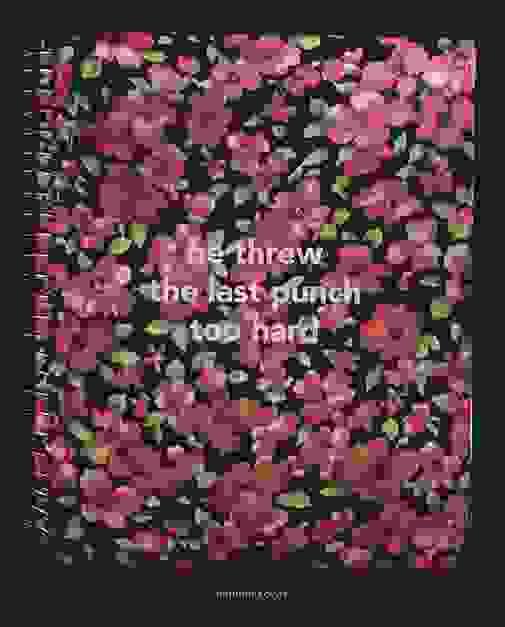
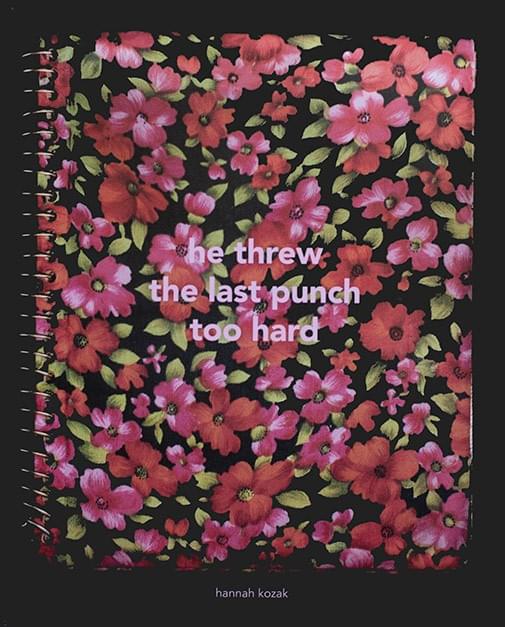
Hannah Kozak
-He threw the last punch too hard
2020
The book “He Threw The Last Punch Too Hard” by Los Angeles based photographer Hannah Kozak tells the story of her mother Rachel Zarco, a beautiful, passionate, vivacious, and fiery Guatemalan Sophia Loren- type brunette who left Hannah and the family after she fell in love with another man. The man turned out to be violent. He beat her so badly that she suffered permanent brain damage and had to be moved into an assisted living facility at the age of forty one, where she still lives today. Since 2009, Hannah has followed her difficult journey and this book is their story. A story that could inspire other women to leave an abusive relationship, before it’s too late.
Holly Lee -
Double Double Box in a Valise Photography
2020
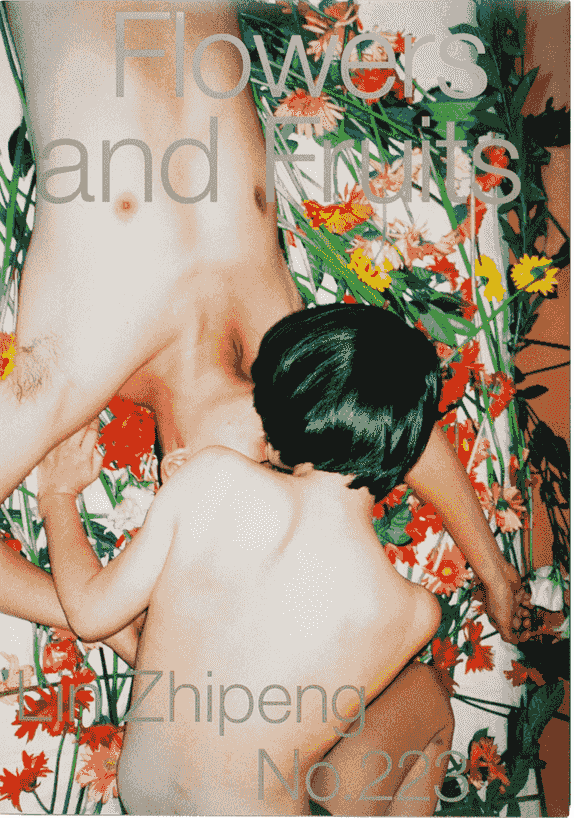
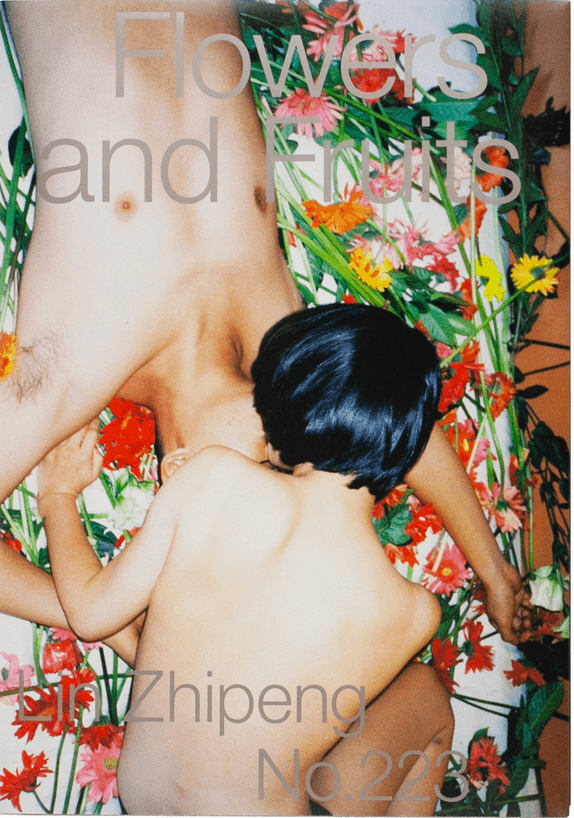
Lin Zhipeng - Flowers and Fruits
2020
"Flowers and Fruits" is a series of flowers and fruits, which 223 has taken many times as motifs of subjects. The flowers and fruits with vitality and beauty have fascinated many people at any time.
223 consciously treats flowers and fruits in his works, but also there are many images with them that were unconsciously included. The collaboration of flowers and fruits with the youth is fascinating and captivating. The flowering time may be very short. The flowers and fruits with that momentary beauty can be said to be the same existence as the young people 223 has been capturing.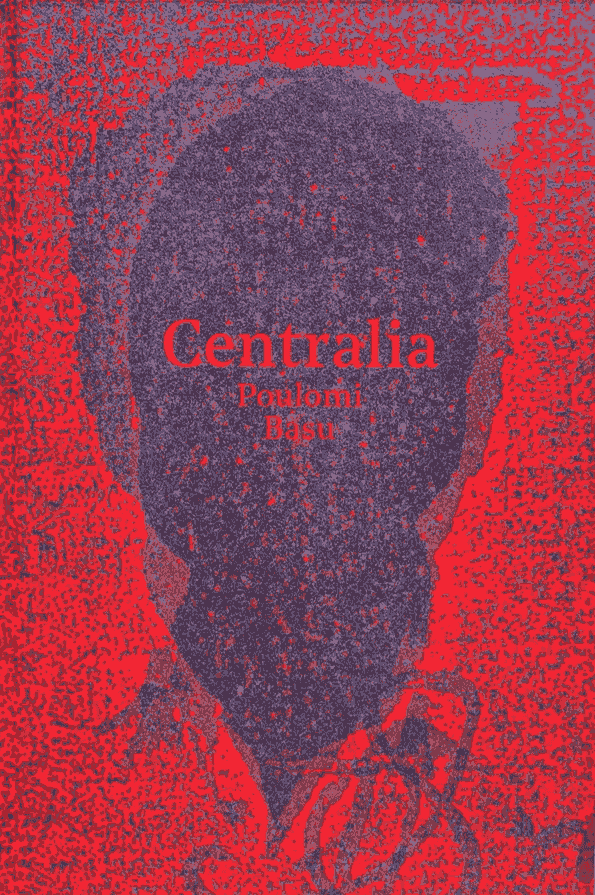
Poulomi Basu - Centralia
2020
Centralia exposes hidden crimes of war as an indigenous people fight for their survival. In war, truth is the first casualty and Centralia explores the unsteady relationship between reality and fiction and how our perceptions of reality and truth are manipulated.
Combining tropes of documentary and fiction, art historian Emilia Terracciano, writing in 1000words magazine, has called Centralia a ‘hallucinatory reflection’ where an invisible conflict between a guerilla army, an indigenous people and the Indian state is associated with wider issues of environmental degradation. Such exploitation comes at a price: the transmogrification of violence into the de-facto language of politics. The voice of resistance is buried by alternate facts. Freedom is shrinking and what we say and who we are is being obscured.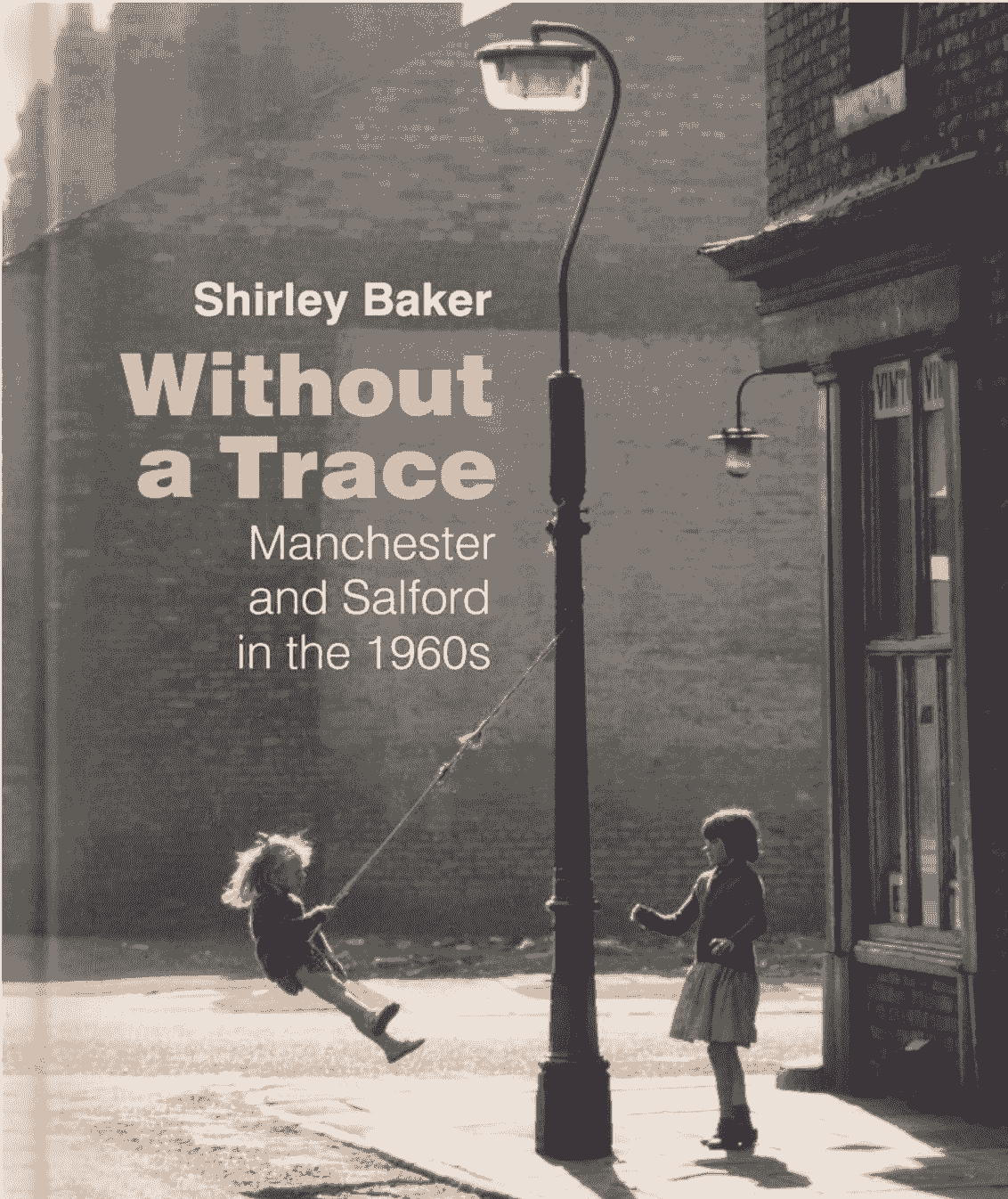
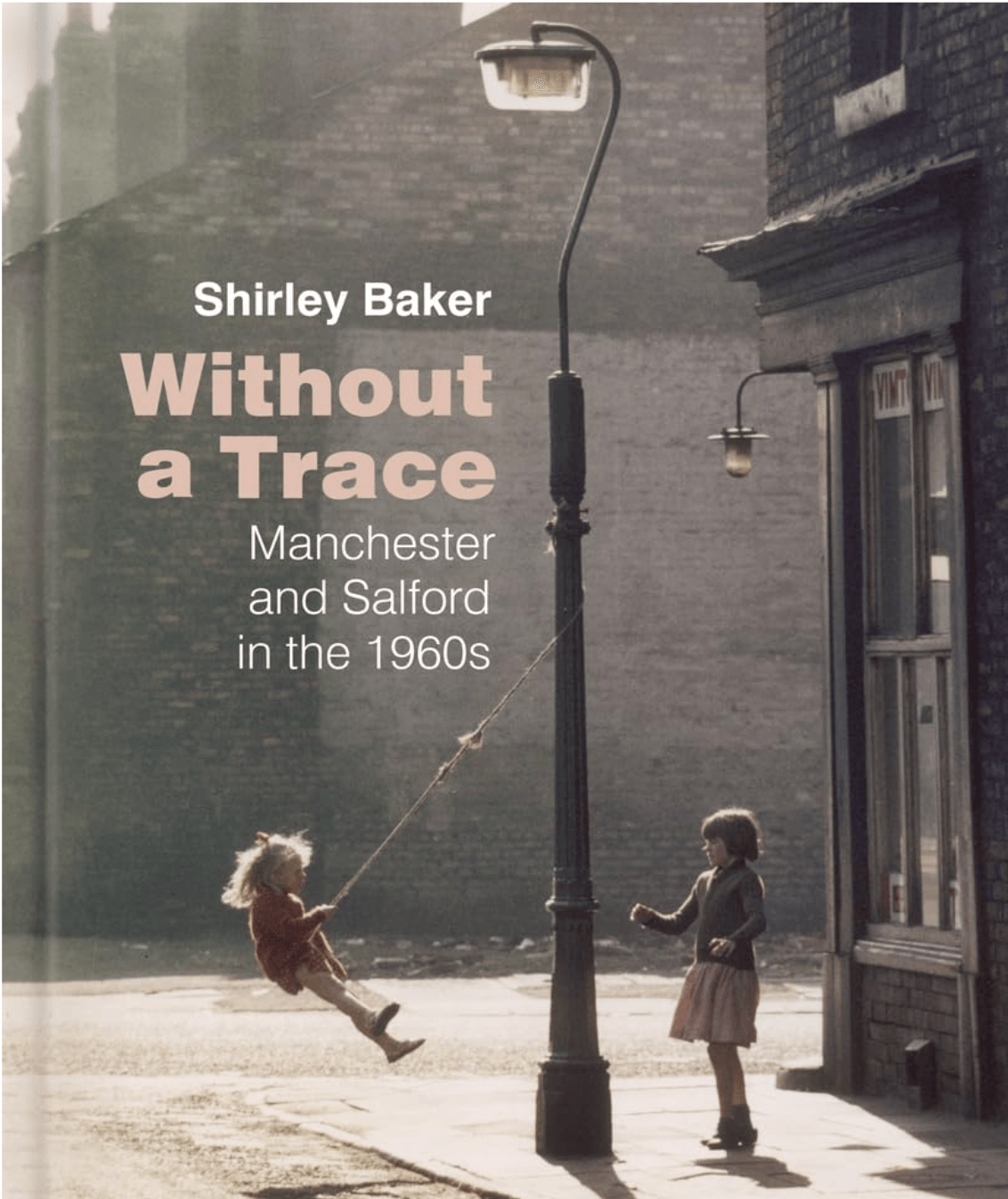
Shirley Baker - Without a trace
2020
Shirley Baker started to photograph the streets of Manchester and Salford in the early 1960s when homes were being demolished and communities were being uprooted: 'Whole streets were disappearing and I hoped to capture some trace of everyday life of the people who lived there. I was particularly interested in the more mundane, even trivial, aspects of life that were not being recorded by anyone else.'
Shirley’s powerful images, sparked by her curiosity, recorded people and communities involved in fundamental change. People’s homes were demolished as part of a huge ‘slum’ clearance programme, however Shirley was able to capture some of the street life as it had been for generations before the change. The areas have been redeveloped to form a new and totally different environment. As Shirley once said, 'I hope by bridging time through the magic of photography, a connection has been made with a past that
should not be forgotten'.
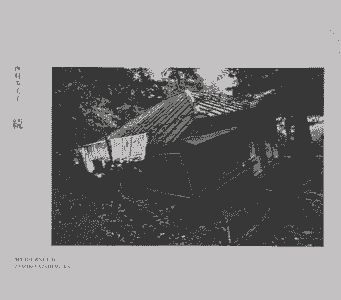
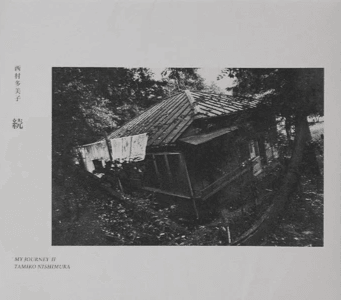
Tamiko Nishimura - My Journey II
2020
Part two of Tamiko Nishimura’s photographic journey through 1960s-80s Japan.
Japanese photographer Tamiko Nishimura has never ceased to travel, and has never stopped documenting her journeys in photographs. Since her first photobook “Shikishima” in 1973, she has continued to develop her own style of snapshot photography, capturing her surroundings, her impressions as well as her personal life in brilliantly composed photographs. In this second volume of snapshots taken between 1968 and 1989, Nishimura, accompanied by her young daughter, takes us with her to Okinawa, Tohoku, Hokkaido, the Joto and Johoku areas of Tokyo, and many other regions in Japan. In each of her photographs, Nishimura manages to weave together layers of stories and moods, creating images that echo both the external as well as her internal world.
“As we walked along the seashore, we saw a solitary lady gathering seaweed on the rocks in the cold wind. She noticed us and gave us some freshly picked seaweed in a plastic bag. After arriving at our accommodation, I asked the owner to add them to our miso soup for dinner. The flavor of the sea was fragrant; I was grateful for its deliciousness.” — from Tamiko Nishimura’s afterword (included in Japanese & English translation)
Wendy Aldiss - My Father's Things
Pannoval Press 2020
Following the death of her father Wendy Aldiss realised that, in a way, she could continue to photograph him – by making images of his possessions. Wendy went on to photograph absolutely everything that he had in 2018, right down to his paperclips. This labour of love and grieving has resulted in a fascinating and complete catalogue of the items owned by a man of 92yrs; a writer, poet and artist.
Zhong Baomei (宝妹)
- Give me a room and I just take pictures
Three Shadows Publishing 2020